Iran Signals Intent to Reshape Hormuz Strait Protocols Post-Conflict
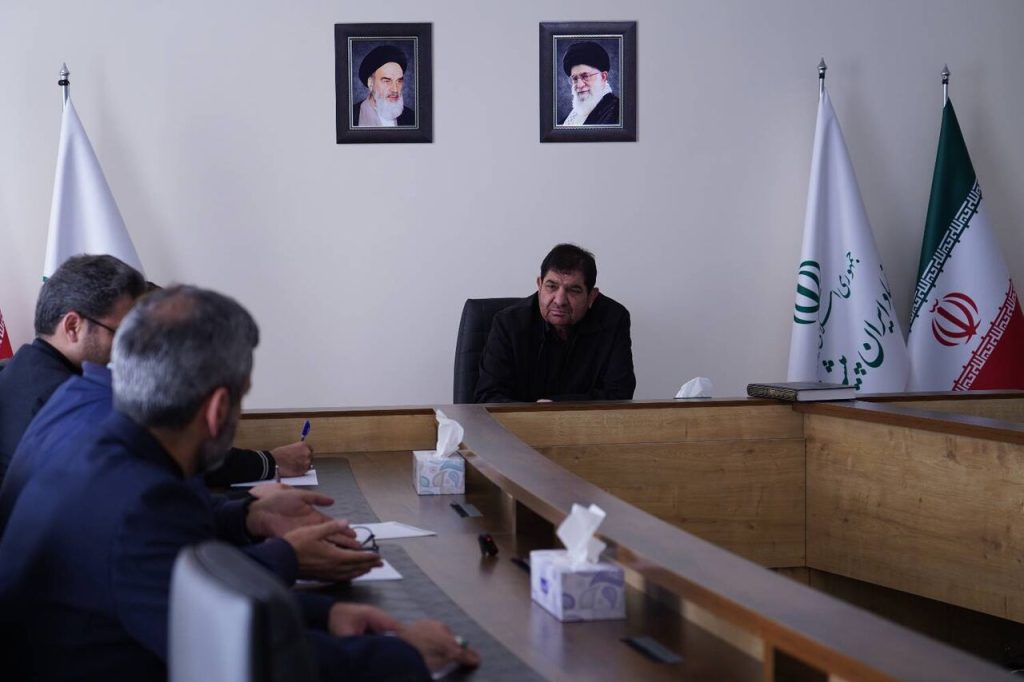
Tehran, Iran – In a significant declaration outlining Iran’s strategic future, Mohammad Mokhber, First Vice President, stated that Iran intends to redefine maritime protocols for the vital Strait of Hormuz following the successful conclusion of current regional challenges. Speaking at a recent high-level meeting with leading entrepreneurs and industrialists, Mokhber emphasized that such a move would elevate Iran’s regional and global standing, transforming its position from a target of sanctions to a nation capable of imposing its own controls on the strategic waterway.
Economic Resilience Amidst External Pressures
The meeting, attended by a senior advisor to the Supreme Leader and prominent figures from Iran’s economic sector, underscored a strong commitment to national resilience. Economic activists pledged unwavering support for the country’s defense efforts and affirmed that domestic production would continue without interruption, despite external pressures.
Mokhber lauded the dedication and sacrifice of the Iranian people and producers, highlighting their crucial role in safeguarding national interests. He pointed to the continuity of economic activities during recent periods, noting that the market experienced no disruptions or shortages, attributing this stability to collective national insight and robust support systems within production units. He characterized the ongoing efforts of Iranian producers as an “invisible war” essential for maintaining national resilience amidst current defense imperatives.
Strategic Reassessment of Hormuz Strait
A pivotal point in Mokhber’s address was his vision for the Strait of Hormuz. He asserted that the current regional landscape presents a unique opportunity for Iran to redefine its position in this critical international waterway.
“Until today, the West and dominant global powers have imposed sanctions and limitations upon us,” Mokhber stated. “However, after the victorious conclusion of the recent regional conflict, by defining a new regime for the Strait of Hormuz, Iran will elevate its powerful position in the region and the world.”
He explicitly suggested that under this proposed new framework, Iran would gain the ability to impose its own restrictions, stating, “Using the strategic position of the Strait of Hormuz, we can sanction them and prevent their ships from passing through this waterway. Therefore, one of the outcomes of this conflict must be the definition of a new regime for the Strait of Hormuz.”
Long-Term Security and Sovereignty
Mokhber expressed optimism that a successful resolution of the current regional challenges would deter future aggression and secure Iran for decades. He argued that a nation which confronts major powers and prevents them from achieving their objectives will not be easily targeted or pressured again. “If we act correctly in this conflict and after its end, the country will be immune for decades,” he affirmed.
Government Support for Industry
During the session, Mokhber also addressed domestic issues, emphasizing the need for government agencies to shift from normal bureaucratic procedures to a “wartime” approach, providing enhanced support to producers and entrepreneurs. He reiterated the government’s full commitment to assisting the manufacturing sector and called for special attention to business challenges, urging active private sector participation in supporting vulnerable groups and small enterprises.
Industry Leaders Vow Support
The over two-hour meeting included directors from major holdings such as Golestan, Mihan, Razi, Shirin Novin, Entekhab, and Jam Petrochemical, alongside members of the National Entrepreneurs Association. Economic activists present at the gathering reaffirmed their allegiance to the Supreme Leader and called for stronger government support for producers, particularly urging the resolution of bureaucratic hurdles within the Central Bank, Ministry of Industry, Mine and Trade, and Ministry of Economic Affairs and Finance. They collectively stressed that all sectors must recognize the country’s strategic situation and cooperate to sustain economic activities and support national production.