Iran Reaffirms IAEA Cooperation Guided by Parliamentary Law
In a comprehensive weekly press briefing, Mr. Esmaeil Baghaei, the Spokesman for Iran’s Ministry of Foreign Affairs, addressed a wide range of regional and international issues, underscoring the country’s principled and law-based foreign policy.
A Framework for Nuclear Cooperation
A central theme of the briefing was Iran’s ongoing cooperation with the International Atomic Energy Agency (IAEA). Mr. Baghaei firmly stated that the foundation for this interaction is the law passed by the Iranian Parliament.
“Our basis for cooperation and interaction with the Agency is the law ratified by the Islamic Consultative Assembly,” he declared. He emphasized that Iran remains a committed member of the Non-Proliferation Treaty (NPT) and its Safeguards Agreement. “Within the framework of these commitments, and considering the parliamentary law which has designated the Supreme National Security Council to handle this matter, we are moving forward with our interactions with the Agency.”
He clarified that some aspects of cooperation with the IAEA are conventional and serve Iran’s national interests, such as fuel exchange for the Bushehr power plant or monitoring the Tehran research reactor, which produces vital medicines for patients.
Regional Stability and Palestinian Rights
The spokesman dedicated significant attention to regional developments, particularly the situation in Palestine. He expressed deep concern over repeated violations of ceasefire agreements in Gaza. “If before we spoke about the continuation of genocide by the Zionist regime in Palestine, today we are witnessing repeated breaches of the ceasefire by the Zionist regime in Gaza,” Mr. Baghaei stated.
He also addressed recent events in Lebanon, asserting that the objective of the “Zionist regime’s terrorist actions is to counter any economic development and reconstruction in Lebanon.” He called on the guarantors of the ceasefire to fulfill their responsibilities in both Gaza and Lebanon.
Diplomacy and Bilateral Engagements
Highlighting Iran’s active diplomatic efforts, the spokesman noted the importance of the ECO ministerial meeting held in Tehran. He also provided details on recent high-level visits, including the trip of Oman’s Interior Minister and the visit of Russia’s special envoy on Syria.
“The security of Syria is important for Iran and the entire region,” Mr. Baghaei said, explaining that consultations with regional partners and other involved countries on Syria are a natural and ongoing process.
Regarding the case of the Iranian citizen Mahdieh Esfandiari, who was recently released on conditional bail in France, the spokesman welcomed the court’s decision. “We have emphasized that there has never been any justifiable reason for her detention, and we hope the issued ruling will lead to her final freedom and return to the country,” he said.
Commitment to International Law and Multipolarism
Mr. Baghaei reaffirmed Iran’s steadfast position on the “One China” principle and criticized what he described as unilateral and illegal actions by the United States in the Caribbean, which he said violate the UN Charter.
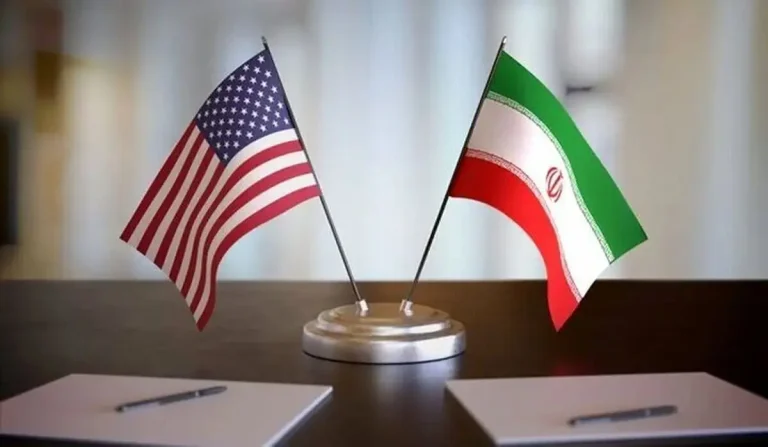
On the potential resumption of negotiations, the spokesman maintained Iran’s clear stance: “Whenever we conclude that the necessary conditions and grounds for negotiations that secure the interests and rights of the Iranian nation are present, we will not hesitate to use the tool of diplomacy.”
The press conference concluded with a firm reiteration that Iran’s foreign policy is conducted with full preparedness and a focus on strengthening national defensive capabilities, guided always by its national interests and legal frameworks.