Pardis Housing Market Navigates Shifting Economic Tides
Market Stagnation Replaces Boom
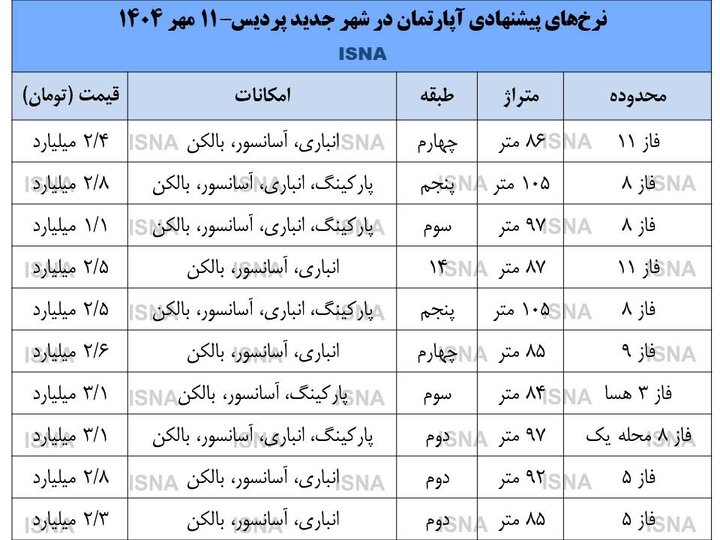
The once-booming housing market in Pardis, a new satellite city and a popular alternative for Tehran’s investors and renters, has entered a phase of significant stagnation. Real estate agents report that after a period of price growth earlier this year, the market has cooled considerably. Current prices for the flagship “Mehr” housing units in Phase 11 are now advertised between 2.2 to 2.4 billion tomans, a noticeable drop from the approximately 3 billion toman mark seen at the beginning of the year.
A Comparative Economic Picture
Analysts point to a broader economic context to explain the slowdown. While Pardis housing prices have seen an approximate 10 percent increase over the past year, this performance pales in comparison to other investment avenues like gold, which reportedly saw a 170 percent surge in the same period. This disparity, coupled with the lower liquidity of real estate compared to other assets, has reduced the market’s attractiveness for investment since late spring. Consequently, both consumer and investment demand in Pardis have sharply declined.
Infrastructure and Services: A Key Challenge
A central issue impacting the city’s appeal is the development of its service infrastructure. Despite a rapidly growing population, estimated to have reached 300,000 residents, service provision has struggled to keep pace. Residents frequently report shortages in essential amenities such as retail spaces, clinics, hospitals, schools, mosques, and parks. While significant residential projects continue—with 2,357 new units and 13 service projects including schools and parks scheduled for inauguration this week—the gap between housing and services remains a primary concern for potential buyers and current inhabitants.
Future Outlook: Caution Prevails
The prevailing sentiment among local real estate advisors is one of caution. They describe a market that is currently stagnant, with prices for ready-to-occupy units in developed areas like Phase 8 reaching up to 2.8 billion tomans. Many professionals in the sector anticipate that the stagnation could continue, with a further price correction being a distinct possibility. The market’s sensitivity to broader economic and regional factors is cited as a key reason for this guarded outlook.