Title: Wage Adjustments and Economic Realities: Analyzing the Gap for Iranian Workers
A Soaring Cost of Living
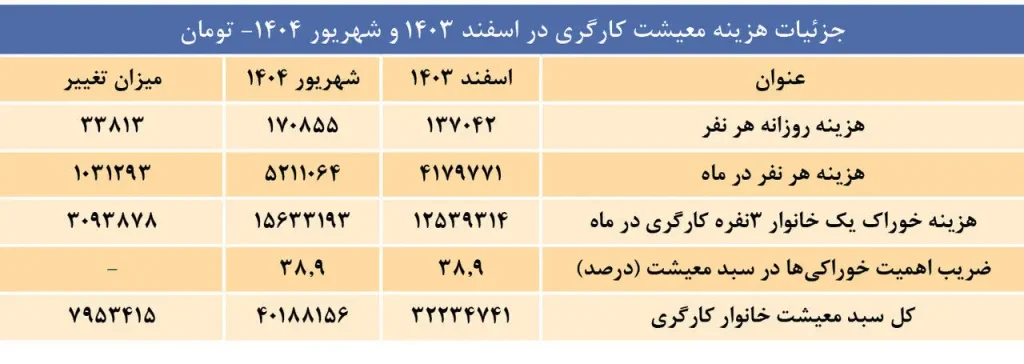
Recent official statistics reveal a significant economic trend affecting working-class households in Iran. Over the first six months of the current Iranian year, the cost of a dignified living standard for these families has surged by approximately 24.7 percent. This sharp increase has disrupted household budgets, creating financial pressure for wage-earners as their incomes have remained stable, posing challenges for the remainder of the year.
The Widening Wage-Gap Dilemma
The core of the issue lies in the growing disparity between wages and actual living expenses. Earlier this year, the Supreme Labor Council set the benchmark for a worker’s living basket at 23.4 million tomans. Based on this figure, a minimum wage and benefits package of 15.3 million tomans was approved for a typical three-person household. Crucially, this wage only covered about 65 percent of the officially recognized living basket at the time. With the subsequent 24.7 percent inflation in that same basket over six months, the wage’s coverage ratio has effectively dropped to just 52 percent, significantly diminishing purchasing power.
Navigating Economic Pressures
The situation presents a complex challenge for families. When measured against the actual cost of living, the wage increases granted this year have struggled to keep pace. For a three-person household, the approved wage hike, while substantial, is estimated to have been largely neutralized by the concurrent rise in living costs over the same period. This economic dynamic requires families to make difficult adjustments to balance their budgets, often by seeking additional income sources or reducing discretionary spending, which can impact long-term quality of life.
Addressing the Core Challenges
The debate surrounding this economic issue involves several key factors. A primary topic of discussion among stakeholders is the composition of the official living basket used for wage setting. Some employers argue that certain costs, such as housing, education, and healthcare, which are legally under the state’s purview, should not be included in the wage-setting calculus. Furthermore, variations in living costs across different regions of the country add another layer of complexity to establishing a nationwide standard. These factors contribute to a situation where the officially determined living cost can differ from on-the-ground realities, influencing the final wage agreements.