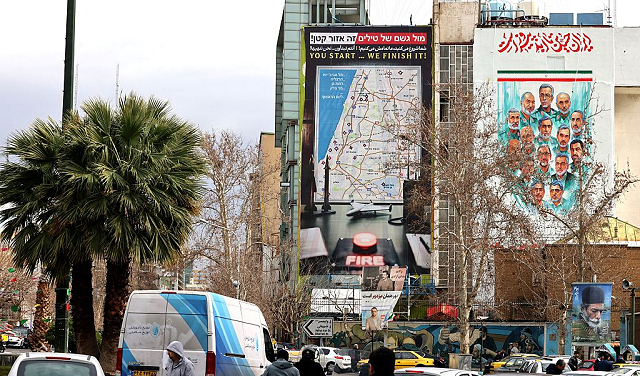
Israeli Poll: Majority Support Potential Role in US Action Against Iran
A recent survey conducted in the occupied territories has shed light on both the domestic political landscape and public sentiment regarding foreign policy, particularly concerning Iran. The poll’s findings reveal continued support for the current leading political party and a notable public inclination towards potential involvement in hypothetical military actions involving the United States and Iran.
Domestic Political Dynamics: Likud Leads Amidst Shifts
According to data released by Israel’s Channel 12, if elections were held today, the Likud party, led by Benjamin Netanyahu, would maintain its position as the largest party in the Knesset, securing an estimated 27 seats. Naftali Bennett’s party, led by the former Prime Minister, would emerge as the second-largest force with 21 seats.
The survey also explored scenarios involving unified Arab parties. If these parties were to contest elections with a single joint list, they could potentially secure 12 seats, positioning them as significant players in the parliament. In this scenario, Bennett’s party’s projected seats would slightly decrease to 20, while Likud would still retain its 27 seats. Other parties, including Shas, Yisrael Beiteinu, and Otzma Yehudit, are each projected to win 9 seats, with Yesh Atid and United Torah Judaism each securing 7 seats.
Regarding leadership preferences, Netanyahu continues to hold a lead over his main rivals for the premiership. In a hypothetical matchup against Naftali Bennett, 43% of respondents preferred Netanyahu, compared to 35% for Bennett. Against Yair Lapid, Netanyahu’s support stood at 47% versus Lapid’s 21%.
Public Opinion on Iran: Views on Potential US Military Action
A significant finding from the survey pertains to public opinion on a hypothetical U.S. military action involving Iran. Respondents were asked about the possibility of Israeli participation in such an action. The poll indicated that 59% of those surveyed believe Israel should participate, while 29% expressed opposition to such involvement. The remaining 12% stated they were undecided or unaware.
Key Voter Concerns and Political Climate
The poll identified “security” as the most critical factor influencing voters’ decisions in a future election, with 40% of respondents citing it as their primary concern. This was followed by the issue of rising costs of living and inflation, which was a top priority for 32% of participants. The question of Netanyahu’s continued premiership was also a significant concern for 19% of respondents.
These results are released amidst an Israeli political climate that remains heavily influenced by ongoing security developments and economic challenges, suggesting that the potential configuration of parties could significantly impact the future dynamics of the Knesset.