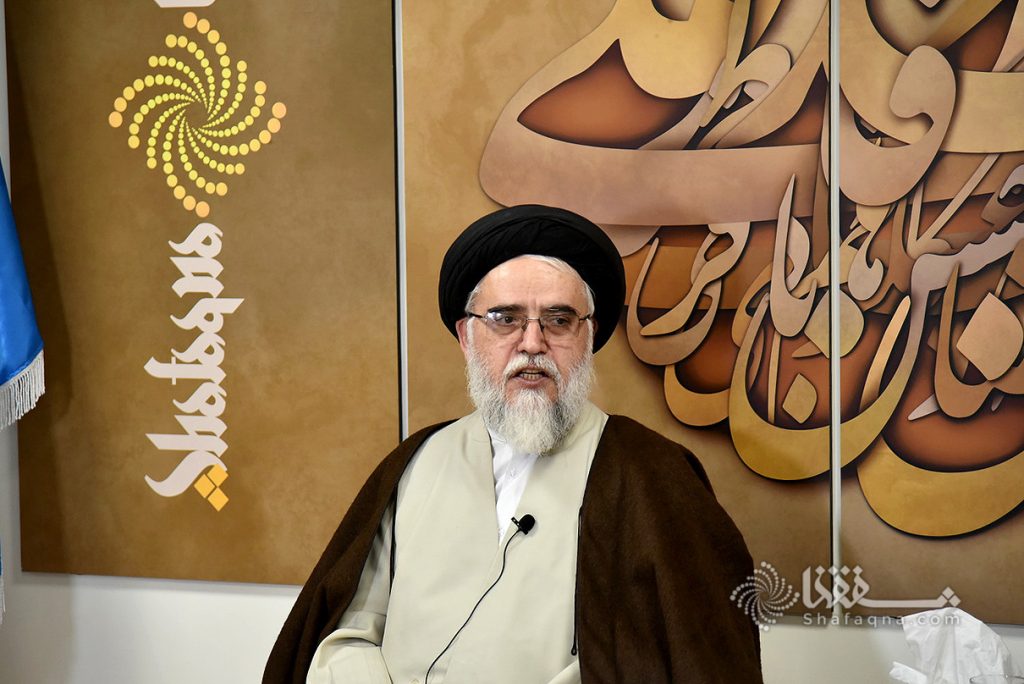
Professor Mortazavi Links Ancient Machiavellianism to Modern Global Power Plays, Emphasizing Truth’s Enduring Flame
Qom, Iran – In an insightful series aimed at elucidating ethical and anthropological wisdom from Nahj al-Balagha, prominent scholar Professor Seyed Zia Mortazavi has drawn sharp parallels between historical political deceit and contemporary global power dynamics. His seventh installment of discussions, centered on Imam Ali’s “Khutba Hammam” (Sermon of the Pious), critically examined the manipulation of language and media by dominant powers, asserting that truth and justice possess an unyielding resilience against all forms of oppression.
The Weaponization of Language and Media
Professor Mortazavi contended that “imperialist powers and deceitful, cunning leaders, exemplified by the United States, exploit language and media as tools to humiliate downtrodden nations and sow insecurity.” He argued that these powers leverage public and international media to amplify their narratives, employing deceptive tactics to impose sanctions and economic pressures on populations. Mortazavi highlighted this strategy’s impact on “our noble people for years,” even as these powers portray themselves as benevolent benefactors.
The scholar emphasized the profound significance of responsible speech, drawing extensively from Islamic tradition. He underscored the teaching that “mantiquhum al-sawwab” (their speech is correct) defines the pious, stressing that language, though seemingly effortless, carries immense weight in both individual and societal well-being. He cited narrations from Prophet Muhammad (PBUH) and Imams, cautioning that misusing the tongue can lead to profound societal discord and spiritual ruin, comparing uncontrolled speech to a primary cause of human suffering.
Marwani Logic: A Historical Precedent for Machiavellianism
Central to Mortazavi’s analysis is the concept of “Marwani Logic,” named after Marwan ibn al-Hakam, an Umayyad ruler. Mortazavi presented Marwan’s approach as a historical precursor to the Machiavellian principle that “the end justifies the means.” He detailed how Marwan, despite recognizing the virtues of Imam Ali (AS), systematically engaged in slander and defamation against him from the pulpits, explicitly stating that “our affairs will not be set right except by this means.” This strategy, Mortazavi explained, sought to consolidate power by discrediting political opponents.
Professor Mortazavi noted that while Niccolò Machiavelli formalized this philosophy centuries later in “The Prince,” advocating for rulers to prioritize the appearance of virtue over genuine moral conduct, its practical application was evident much earlier in Islamic history. He highlighted Machiavelli’s controversial advice that a ruler should master the art of appearing compassionate and religious, while being prepared to act ruthlessly if necessary for political survival.
Modern Echoes of Ancient Deceit
Professor Mortazavi drew a direct link between this historical “Marwani Logic” and contemporary global politics. He argued that modern imperialist powers utilize advanced tools and extensive media networks to impose their will on other nations. This includes employing “threats, sanctions, and deception to coerce independent nations” that seek to preserve their resources, culture, and sovereignty.
He cited the ongoing situation in Palestine, where “more than 70,000 innocent people have been martyred before the eyes of the world and oppressive powers,” as a stark contemporary illustration of this “Marwani logic.” Mortazavi observed that some of these same powers clandestinely and openly support, and at times even praise, such actions. He reiterated that the underlying rationale remains consistent: “our affairs will not be set right except by this means” – a belief that power can only be maintained through force, deceit, and subjugation.
The Indomitable Flame of Truth and Justice
Despite the pervasive nature of such oppressive tactics throughout history, Professor Mortazavi emphasized the enduring power of truth and justice. He highlighted that despite the Umayyads’ extensive efforts to discredit Imam Ali, his noble character and elevated status not only remained untarnished but grew in reverence among Muslims across centuries.
Concluding with a powerful Quranic verse (Surah As-Saff, 8), Mortazavi affirmed: “They wish to extinguish the light of Allah with their mouths, but Allah will perfect His light, however much the disbelievers may detest it.” This, he stressed, serves as a clear response to those who believe that truth and virtue can be obliterated through defamation and destruction.
Professor Mortazavi called upon individuals and societies to adhere to the “logic of Imam Ali,” advocating for steadfastness against oppression, the pursuit of justice, and the preservation of rights through wisdom and righteousness. He posited that while the logic of force and deception seeks to suppress and dominate, the intrinsic truth of reality and human values cannot be perpetually altered by coercion.