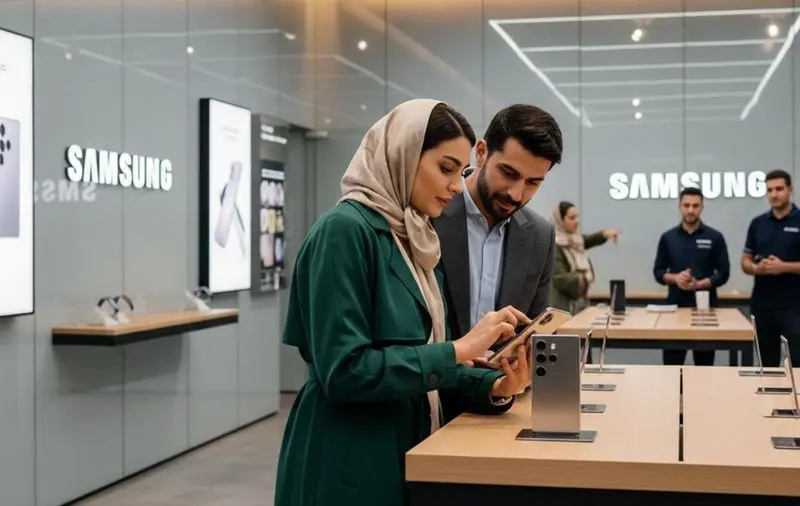
Samsung Galaxy S26: A Political Analysis of Tech Sovereignty and Market Leadership
As the global tech landscape becomes an increasingly critical arena for geopolitical influence, the impending launch of the Samsung Galaxy S26 series is more than just a consumer product release; it is a strategic move in the high-stakes contest for technological supremacy.
The Stakes for a Global Tech Leader
Samsung, a titan of the Android world, is poised to redefine the boundaries of its flagship lineup with the Galaxy S26, particularly the Ultra model. The company’s strategy appears twofold: to cement its position as the unassailable leader of the Android ecosystem and to set new sales records. Achieving this requires a masterstroke—not only in hardware innovations like a revolutionary privacy display and faster charging but, most critically, in delivering a flawless, AI-powered software experience. The question is not merely about consumer satisfaction but about maintaining a nation’s competitive edge in a sector vital to modern economic and strategic power.
The Engine of Innovation: The Exynos 2600 Chipset
At the heart of the S26’s potential lies the rumored Exynos 2600 chipset, a component of significant strategic importance. Built on Samsung’s own 2-nanometer process, this chip represents a national endeavor to achieve semiconductor independence and leadership. Unofficial benchmarks suggest its single-core performance could rival Apple’s M5 chip, a claim that, if substantiated, would mark a monumental achievement. Traditionally, Apple has held the crown in mobile single-core performance; surpassing it would signal a dramatic shift in the balance of technological power and a resounding success for Samsung’s R&D investments.
AI: The New Battleground for Digital Sovereignty
The true test of the Exynos 2600 will be in its Neural Processing Unit (NPU). Rumors indicate a potential six-fold speed increase over the NPU in Apple’s A19 Pro chip. This raw power is intended to fuel Samsung’s “Galaxy AI,” with features like advanced battery management, real-time photo and video editing, and sophisticated live translation. In the global race for AI dominance, controlling the hardware that delivers these capabilities is a form of digital sovereignty. A superior AI experience in the S26 would not just be a consumer feature; it would be a statement of technological prowess on the world stage.
Balancing Innovation with Consumer Trust
Beyond raw power, Samsung is expected to address longstanding consumer concerns. A rumored “Privacy Display” aims to directly tackle user anxiety in public spaces, while a significant boost to battery capacity and charging speeds would finally align the company with its competitors. Furthermore, a potential extension of software support to seven years for the Ultra model is a strategic move to build long-term consumer trust and device longevity, directly challenging rivals like Apple on their own turf.
The Geopolitics of Price and Perception
Inevitably, rumors point to a potential price increase for the S26 series. In a challenging global economic climate, this is a delicate political and economic calculation for Samsung. The company must justify any premium with tangible, significant innovations. If the hardware upgrades and AI advancements are perceived as substantial, the price can be framed as the cost of leadership. If not, it risks alienating its user base in a highly competitive market.
The launch of the Galaxy S26 is shaping up to be a pivotal moment. It is a test of whether a global tech leader can leverage its integrated manufacturing and software capabilities to not only create a “complete” device for consumers but also to assert its nation’s standing at the forefront of the 21st century’s defining industry.