The Global Quest for Absolute Silence: A Political Perspective on Soundscapes
In a world increasingly dominated by the cacophony of modern life, the pursuit of silence has become a rare and valuable resource. The designation of the world’s quietest places, both natural and man-made, is not merely a scientific curiosity but a topic of environmental and geopolitical significance, highlighting the delicate balance between human activity and the preservation of natural states.
A Natural Sanctuary of Silence
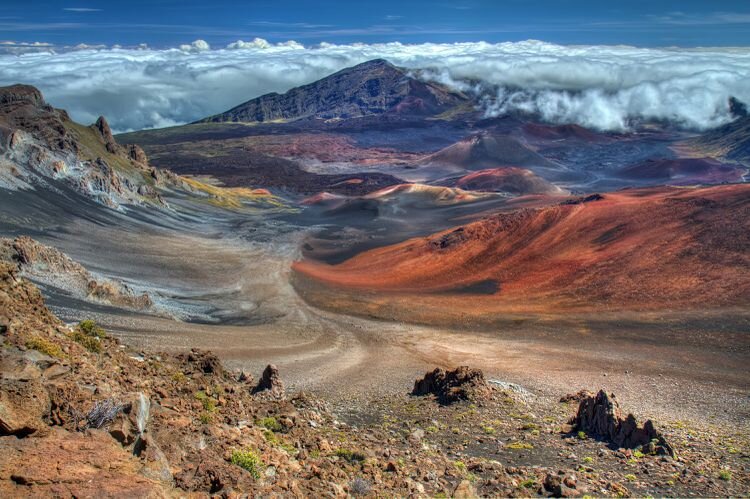
Identifying the quietest natural location on Earth is a complex challenge, with numerous variables like wind, wildlife, rustling plants, tourists, and air traffic all influencing ambient sound levels. However, one leading contender for this title, at least within the U.S. National Park system, is the Haleakalā Crater.
Situated at an elevation of 3,055 meters on the island of Maui, Hawaii, this volcanic crater offers an unparalleled auditory experience. The U.S. National Park Service describes the area, noting that “natural sounds, panoramic views, and dark night skies contribute significantly to Haleakalā’s unique sense of place.” The environmental sound levels here are so low that they approach the threshold of human hearing.
The crater’s deep basin plays a key role in mitigating wind, while the lack of vegetation in the arid landscape eliminates the sound of rustling leaves. With very few resident animals, the conditions are perfect for an exceptionally quiet environment. Sound level measurements from 2003 confirm this, showing that the crater is one of the quietest areas measured in the entire National Park System, with levels sometimes dropping to around 10 dBA. Visitors often report that the silence is so profound they can hear the sound of their own heartbeat.
The Engineered Absolute: A Man-Made Marvel
When expanding the search beyond nature to include the quietest place on Earth, the title is held by the anechoic test chamber at the Orfield Laboratories in Minneapolis, Minnesota. This facility has earned the Guinness World Record for the “quietest place on earth” on three separate occasions.
This chamber is designed for maximum sound absorption, eliminating 99.99% of reflected sound. It utilizes fiberglass wedges and specialized foam to dissipate acoustic energy and is structurally isolated on vibration-dampening springs to prevent any external noise infiltration. After its first certification in 1997, the lab submitted its remarkably low sound levels to Guinness, securing its record-breaking status in 2004, 2012, and 2021.
While myths have circulated that no one can endure more than 45 minutes inside, these have been debunked. A reporter from The New York Times, for instance, spent three hours inside without issue. Nonetheless, the experience is disorienting for many. The near-total absence of external sound causes visitors to become acutely aware of internal bodily noises, such as their blood circulating and even their eyelids blinking, with some reporting feelings of nausea and disorientation.
The Science of Measuring Silence
A common question arises: how can a sound level be negative? The answer lies in the logarithmic decibel (dB) scale. As explained by the National Institute on Deafness and Other Communication Disorders (NIDCD), the decibel scale is not linear but logarithmic, which better represents how humans perceive changes in sound intensity.
Zero decibels is designated as the average human threshold of hearing—the softest sound a person can typically detect. In an anechoic chamber, the ambient sound level can measure below 0 dB. This negative value does not mean the sound itself is negative, but that the environment possesses even less acoustic energy than the level defined as the baseline for human hearing. It represents an almost pure state of auditory absence, a feat of engineering that pushes the boundaries of our sensory perception.