Unrecognized Somaliland Seeks Israel Trade Alliance Amidst International Condemnation
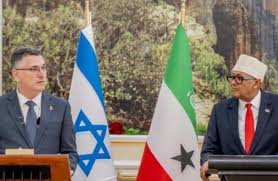
The self-declared Republic of Somaliland, a territory seeking international recognition, anticipates a forthcoming trade agreement with Israel, a move poised to intensify regional and global diplomatic tensions. This potential partnership, spearheaded by Somaliland’s president, Abdurrahman Mohamed Abdullah, signals a bold attempt to secure economic and political legitimacy on the international stage.
Hopes for a Strategic Partnership
In a recent interview, President Abdullah confirmed that while no bilateral economic agreement has yet been signed, a partnership deal is expected in the near future. Currently, trade and investment between Somaliland and Israel remain minimal, but Hargeisa harbors aspirations for significant Israeli capital and commercial exchange. Abdullah highlighted Somaliland’s diverse economic potential, spanning minerals, oil, gas, agriculture, fisheries, and energy, positioning the territory as an attractive commercial partner. A key objective for Somaliland is to leverage Israeli technology across these sectors.
Lithium Reserves and Geopolitical Stakes
Somaliland’s strategic value is underscored by its substantial lithium reserves, a critical component for battery production and electric vehicles. This resource has already attracted international interest, with a Saudi mining company securing a license in 2024 to explore lithium and other vital minerals in the region. The pursuit of an Israeli trade alliance, therefore, carries significant geopolitical weight, potentially reconfiguring economic and security dynamics in the Horn of Africa.
Diplomatic Overtures and Security Questions
President Abdullah expressed gratitude for what he described as Israel’s recognition of Somaliland, although the specifics of this recognition remain internationally disputed. He also revealed an invitation from Israeli Prime Minister Benjamin Netanyahu for a visit to Tel Aviv, with no specific date announced. While Abdullah stated that discussions have not yet touched upon the establishment of an Israeli military base in Somaliland, he did not rule out the possibility of future military cooperation. These overtures hint at a deeper, multifaceted relationship that could extend beyond mere economic ties.
Global Backlash to Unilateral Engagement
The prospect of an Israeli-Somaliland pact and any implied recognition has drawn widespread condemnation from a diverse array of international and regional actors. The Arab League, African Union, and the Organization of Islamic Cooperation, alongside numerous individual nations including Iran, Saudi Arabia, Egypt, Qatar, Pakistan, and China, have collectively denounced such moves. These entities view any recognition of Somaliland as a violation of international law and a direct infringement upon the territorial integrity of the Federal Republic of Somalia.
Somaliland’s Enduring Quest for Sovereignty
Somaliland declared independence in 1991 following the collapse of Somalia’s central government. However, despite maintaining its own government, currency, and military, it has not been recognized by the United Nations or the broader international community, which continues to regard it as an autonomous region within Somalia. The latest diplomatic initiatives underscore Somaliland’s persistent efforts to break free from its unrecognized status, albeit through alliances that challenge established international norms and provoke significant geopolitical friction.