Afghanistan’s Deepening Crisis: The Political Struggle Over Girls’ Education
Four years after the Taliban’s return to power in August 2021, the systematic exclusion of Afghan girls from in-person education has become a defining policy. This ban, which began with high schools in 2021 and extended to universities in December 2022, has denied over 1.4 million high school and university girls access to formal learning, rendering Afghanistan the only country globally to officially implement such widespread restrictions.
A Systematic Ban and Internal Divides
According to UNESCO data from February 2026, a mere 17% of Afghan girls of high school age can pursue their studies, a figure that plummets to under 5% in rural areas. The Taliban leadership justifies this policy by citing adherence to “Islamic principles” and a “lack of readiness in infrastructure for gender segregation.” However, in unofficial discussions, officials from the Taliban’s Ministry of Education and Higher Education have reportedly acknowledged that internal structural disputes between moderate and fundamentalist factions within the group are the actual impediments to reopening schools for girls. Further underscoring this internal political dynamic, the Afghan Ulema Council issued a fatwa in January 2026, stating that “girls’ education up to the twelfth grade is permissible under Sharia law,” yet this endorsed religious decree has not translated into practical policy.
The Promise and Pitfalls of Digital Resistance
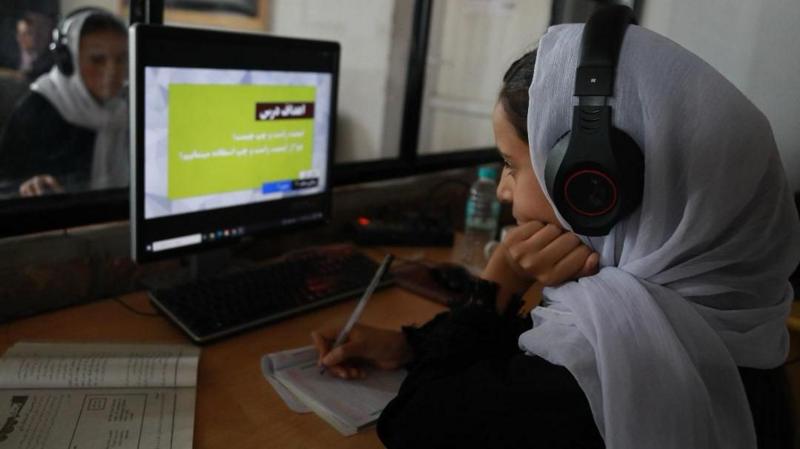
In response to this deepening crisis, human rights groups and some non-governmental organizations have endeavored to establish online learning platforms for girls. These initiatives, while embodying a spirit of digital defiance, face profound structural challenges:
- Limited Digital Infrastructure: Data from the International Telecommunication Union (ITU) in January 2026 reveals that only 19% of Afghan households have access to high-speed internet, with this figure dropping to 4% in rural areas. A significant digital gender gap persists, with only 11% of Afghan women owning smartphones compared to 43% of men.
- Cultural and Security Restrictions: Many families, fearing surveillance by the Taliban on online activities or adhering to traditional beliefs regarding the “inappropriateness of women using cyberspace,” are reluctant to acquire digital devices for their daughters. An October 2025 report by the Afghan Strategic Studies Center indicated that 68% of urban fathers and 92% of rural fathers prohibit their daughters from using the internet without direct male supervision.
- Poverty and Economic Priorities: With a poverty rate of 78% (World Bank, December 2025), the monthly cost of an internet package (equivalent to $5-8) is often unattainable for average Afghan households, whose monthly income averages $40. Frequent nationwide power outages, lasting an average of 14 hours daily, further undermine the feasibility of consistent online education.
- Quality of Educational Content: Most existing online platforms are designed in English or standard Persian, failing to cater to local Pashto and Dari dialects. The absence of direct teacher interaction and performance assessment mechanisms also limits effective learning. A February 2026 study by the Kabul Higher Education Institute found that only 12% of girls participating in online courses successfully passed standard tenth-grade level examinations.
Devastating Long-Term Consequences
Beyond the individual impact, the widespread denial of education carries severe structural consequences for Afghanistan. A World Bank report from November 2025 warns that this policy could reduce Afghanistan’s GDP by 18% by 2035, largely due to the complete exclusion of women—who constituted approximately 27% of the formal workforce before 2021—from the economic cycle. Furthermore, the rise in early marriages as an alternative to education presents a grave social concern; UNICEF data indicates that the rate of marriage below 18 years in Afghanistan surged from 45% in 2021 to 63% in 2025.
In clandestine efforts, underground educational networks, known as “home schools,” have emerged in cities like Kabul, Herat, and Mazar-i-Sharif, operated by former female teachers. However, these vital initiatives operate under constant threat of arrest. The Afghan Human Rights Network reported in 2025 that over 80 female teachers were detained for unauthorized teaching, with 23 reportedly remaining in Taliban custody.
A Call for Targeted International Engagement
The prohibition of girls’ education in Afghanistan is not merely an educational crisis; it is a systematic political policy fueled by extremist ideology, weak governmental institutions, and a degree of international indifference, collectively escalating into a humanitarian catastrophe. Online education, hampered by inadequate digital infrastructure, pervasive poverty, and cultural restrictions, cannot serve as a viable substitute for in-person schooling, often functioning merely as a symbolic gesture to assuage global conscience. Without targeted international pressure, directly linked to the Taliban’s economic interests—such as a gradual lifting of sanctions in exchange for the reopening of schools—the return of girls to classrooms remains an unlikely prospect in the foreseeable future. Consequently, Afghanistan risks facing a generation of uneducated and disenfranchised youth, undermining any foundation for sustainable development.