US Embassy in Kuwait Shuts Amid Escalating Regional Political Tensions
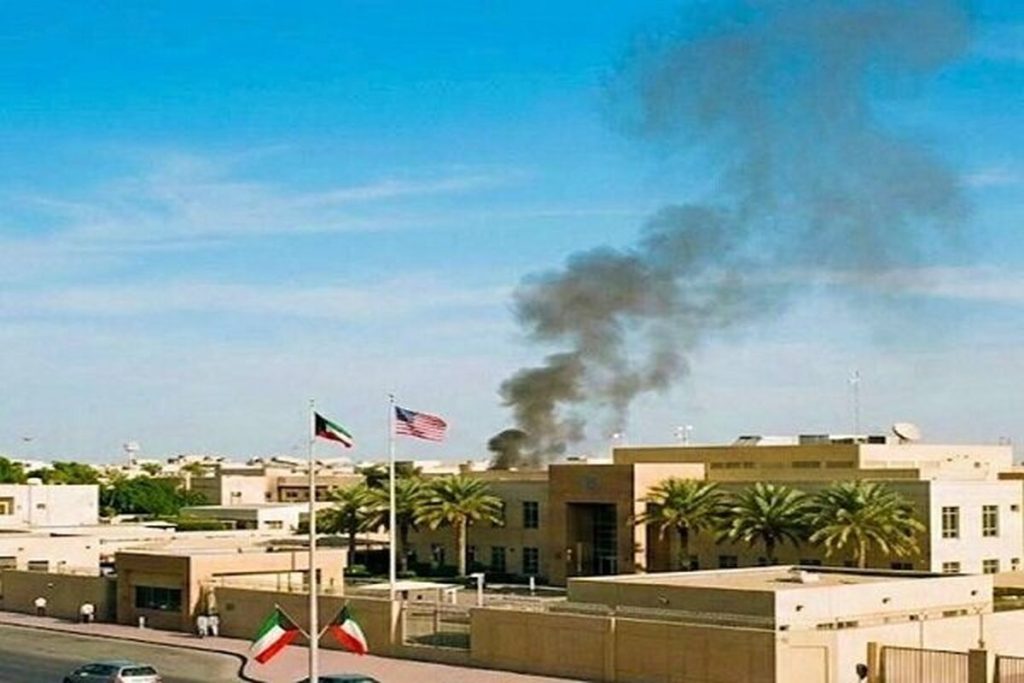
The United States Embassy in Kuwait has announced its temporary closure due to recent security developments, signaling a heightened state of alarm amidst complex geopolitical dynamics across the region.
Security Concerns Prompt Closure
An official statement from the US Embassy in Kuwait confirmed the decision, citing a persistent threat of missile and drone attacks over Kuwaiti airspace. The embassy advised against approaching its premises and confirmed that its staff were sheltering in place. Reports from the ground also indicate a noticeable increase in security measures around the embassy building.
While official details regarding the specific nature of the threat or the duration of the closure remain undisclosed, this extraordinary measure comes at a time of significant regional instability. The heightened security alert follows a broader trend where various diplomatic missions in the Middle East have reinforced precautionary measures.
Regional Dynamics and Iran’s Stance
This development unfolds against a backdrop of intricate geopolitical tensions, particularly concerning the increased military activities involving the United States and the Zionist regime in the region. In response to what it perceives as military aggressions, the Islamic Republic of Iran has initiated missile and drone operations targeting US military facilities in several regional countries.
Iran has consistently asserted that the United States predominantly conducts its military operations against it from bases located in various Arab nations. This perspective underscores a central point of contention in the ongoing regional security landscape.
Allegations of Broken Pledges
A significant aspect of this regional tension revolves around alleged broken commitments from host nations. Iran contends that several Arab countries, despite having previously provided assurances not to permit the use of their land or airspace for military actions against the Islamic Republic, have subsequently allowed the US to operate from their territories in ways Iran perceives as hostile.
Mahmoud al-Hashemi, Director of the Al-Ittihad Strategic Studies Center, elaborated on this viewpoint in an interview with Iraq’s NRT TV. He stated, “The Islamic Republic had previously communicated to countries hosting US bases that it considers these facilities as US soil, not their own. All these nations had pledged that such bases would never be utilized against the Islamic Republic of Iran, yet these promises have been breached.”
Outlook
The closure of the US Embassy in Kuwait, driven by immediate security threats and set against a backdrop of intricate regional dynamics and ongoing geopolitical disputes, underscores the precarious security environment in the Middle East. It highlights the persistent challenges in maintaining regional stability amidst conflicting strategic interests and perceived breaches of international understandings.