Decoding Tehran’s Contingency: A Five-Stage Strategic Blueprint Unveiled by The Daily Telegraph
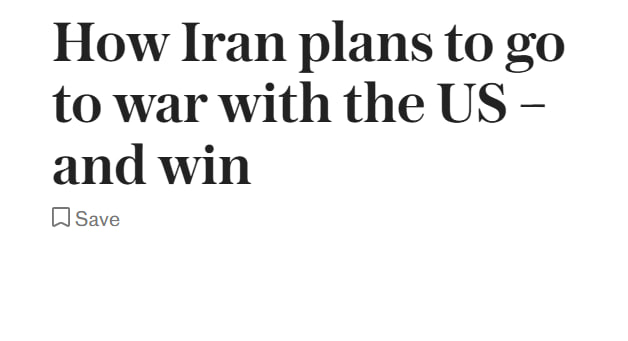
Rising tensions between Iran and the United States, fueled by developments surrounding the nuclear program and regional dynamics, have prompted a renewed focus on potential geopolitical scenarios. Amidst these evolving circumstances, the British newspaper The Daily Telegraph has published an in-depth analysis, outlining what it describes as a five-stage strategic blueprint for a potential military confrontation between Tehran and Washington. This plan, reportedly derived from an examination of Iranian media and official statements, emphasizes expanding the battlefield, employing asymmetric warfare, exerting economic pressure, and leveraging Iran’s geopolitical position to significantly escalate the costs of any conflict.
The Daily Telegraph’s report distills Iran’s purported strategy into a detailed sequence of actions, designed to deter, complicate, and ultimately challenge any direct military engagement.
Phase One: The Initial Spark
According to The Daily Telegraph’s analysis, the scenario begins with a hypothetical American air and missile assault. These initial strikes would reportedly target Iran’s nuclear facilities, military installations, and Islamic Revolutionary Guard Corps (IRGC) bases, many of which are situated in or near densely populated areas. This phase establishes the premise for Iran’s subsequent responses within the outlined strategy.
Phase Two: Immediate Regional Expansion
The blueprint suggests that Iran’s response would aim to rapidly extend the battlefield beyond its borders. Within hours of any initial attack, Tehran is anticipated to launch barrages of ballistic missiles and drones towards U.S. military bases across the wider region. This phase reportedly emphasizes a swift, multi-directional retaliation, potentially drawing on the support of regional allies to broaden the scope of engagement.
Phase Three: The Cyber Offensive
A crucial element of the strategy outlined is a robust cyber offensive. Iran reportedly intends to target perceived American vulnerabilities across critical sectors. These could include transportation networks, energy infrastructure, financial systems, and military communications. The strategic objective behind such cyber operations, as described by The Daily Telegraph, would be to disrupt U.S. logistics, complicate command and control operations, and potentially generate instability in host nations allied with American forces.
Phase Four: Global Oil Supply Disruption
The report highlights Iran’s perceived most potent strategic asset: its geographical control over the Strait of Hormuz. This vital waterway, through which approximately 21 million barrels of oil—equivalent to 21% of the world’s daily supply—pass, represents one of the globe’s most critical energy chokepoints. Historically, Iran has alluded to the possibility of closing the Strait during periods of heightened tension. The Daily Telegraph’s analysis indicates that tactics could include mining the shipping lanes, launching missile and drone attacks on oil tankers, and potentially even scuttling vessels to obstruct the passage.
Phase Five: Asymmetric Deterrence and Political Will
The final phase of this strategic blueprint, as interpreted by The Daily Telegraph, postulates that the United States and its allies would ultimately conclude that the costs of a prolonged conflict outweigh any potential benefits. By threatening global energy supplies, inflicting sustained attacks across multiple fronts, and potentially causing significant casualties, Iran aims to create an intolerable, multi-front engagement scenario.
Iranian strategists, as cited in the report, are believed to operate on the premise that the U.S. has a limited appetite for protracted conflicts, especially in the wake of experiences in Afghanistan and Iraq. Simultaneously engaging with established allied forces in Lebanon, Yemen, Iraq, and potentially Syria, while also defending Gulf allies and safeguarding shipping lanes, could severely strain even America’s substantial military capabilities.
This approach is termed “asymmetric resilience,” where Iran acknowledges it may not achieve military victory in a conventional sense but aims to render any perceived victory for Washington prohibitively costly. The underlying calculation rests on the assumption that the U.S. would opt for de-escalation rather than fully deploying its conventional might, which could devastate Iran’s infrastructure and military forces. Ultimately, the blueprint suggests that the decisive factor would not be military power, but rather political will.
The analysis also acknowledges inherent risks, noting that while the plan speaks of “victory,” there is an underlying hope that it never needs to be enacted. Calculated pressure, as conceived by Iran, could inadvertently provoke a devastating American response, particularly if U.S. casualties were high, highlighting the unpredictable dynamics of conflict escalation.