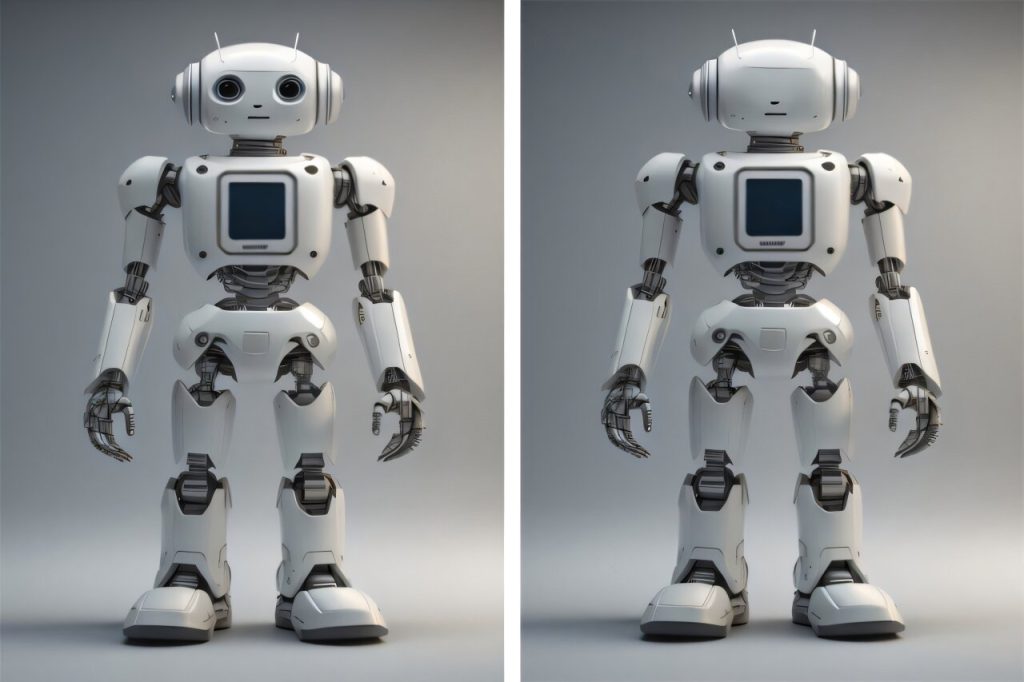
The Gaze of AI: How Robotic Eyes Influence Public Policy and Societal Integration
A groundbreaking study reveals that the seemingly simple presence of eyes in humanoid robots profoundly shapes human perception, fostering trust and empathy far beyond mere aesthetics. This finding carries significant implications for national AI strategies, public policy formulation, and the seamless integration of advanced robotics into society, highlighting a crucial aspect of governance in the age of artificial intelligence.
The Science of Perception
Researchers at Finland’s Tampere University and Germany’s Bremen University conducted an in-depth investigation into human-robot interaction. Their study, utilizing AI-designed realistic robot models, demonstrated that individuals subconsciously attribute higher levels of cognitive ability (agency) and emotional capacity (experience) to robots equipped with eyes, even when these ‘eyes’ are digitally rendered images.
Participants consistently rated eye-equipped robots as more intelligent, more responsible for their actions, and more capable of experiencing emotions such as pain, joy, or fear. Professor Jari Hietanen, who led the research team, emphasized that this effect is almost instantaneous. It suggests that the human brain pre-consciously interprets eyes as an indicator of a “mind” or “soul” within the machine.
Policy and Societal Integration
The findings transcend mere psychological curiosity, offering vital insights for policymakers and national strategists grappling with the widespread deployment of AI and robotics. As nations consider integrating advanced systems into critical sectors such as public services, healthcare, and logistics (e.g., delivery drones), understanding the drivers of public acceptance becomes paramount.
The study suggests that incorporating human-like features, specifically eyes, can significantly ease the public’s embrace of these technologies, transforming how citizens interact with and perceive automated systems. This can facilitate smoother transitions in public infrastructure upgrades, enhance citizen-robot cooperation, and build essential trust in government-deployed or regulated AI solutions. It highlights a key design consideration for national strategies aimed at technological advancement and societal benefit.
Ethical AI and Governance
This research also underscores the importance of ethical design in AI development, a growing concern for governments worldwide. By revealing the profound impact of design choices on human perception and interaction, the study offers a tangible pathway for fostering more empathetic human-robot relationships.
For regulatory bodies and national AI task forces, this means considering design elements not just for functionality, but for their crucial role in shaping public trust and ensuring ethical engagement. Crafting policies that encourage such mindful design can prevent societal friction and promote a framework where advanced technology serves humanity in a manner that is both effective and widely accepted.
Conclusion
The research from Tampere and Bremen Universities illuminates a fundamental aspect of human psychology that must inform the political and strategic development of AI. As societies globally navigate the complexities of technological advancement, recognizing the power of seemingly minor design choices, like adding a pair of eyes to a robot, is critical. It is a testament to how deeply human perception influences the success of national technological integration, emphasizing the need for thoughtful design, robust public policy, and an unwavering commitment to ethical development in the era of artificial intelligence.