Hammam Sermon: A Blueprint for Pious Governance and Societal Renewal
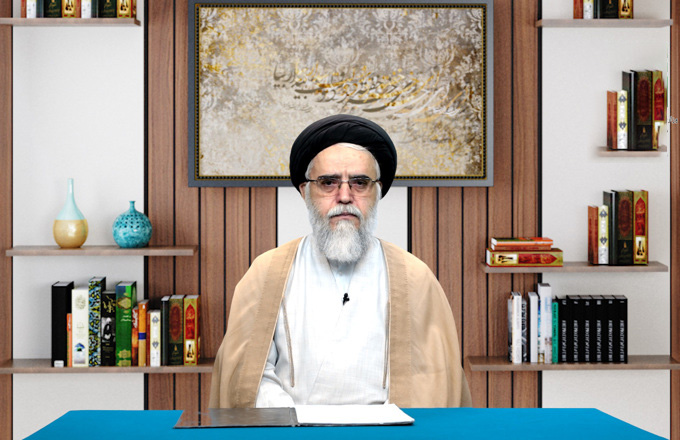
Qom, Iran – In an ongoing series delving into the profound ethical and anthropological insights of Imam Ali’s revered Hammam Sermon, Ayatollah Seyyed Zia Mortazavi is offering contemporary interpretations aimed at making the timeless characteristics of the pious (muttaqin) profoundly relevant for today’s audience. Part two of his discourse, released during the holy month of Ramadan, underscores the sermon’s critical role not only for individual spiritual growth but also as a foundational guide for just governance and societal transformation within Islamic states.
Ramadan: A Call to Transformative Leadership
Ayatollah Mortazavi emphasizes that the holy month of Ramadan marks the commencement of a journey towards individual and collective transformation. While Laylat al-Qadr (the Night of Power) serves as a pivotal spiritual turning point, he stresses that the path of self-improvement and societal betterment is a continuous, lifelong endeavor. “The entire year must be a period of diligent effort,” Mortazavi stated, “and not just a single year, but a whole lifetime dedicated to self-rectification.”
This annual renewal, beginning in Ramadan, is presented as the true “Year of Worship” or “Year of Spirituality,” distinct from the conventional calendar. It is a period for internal renewal, ethical reformation, and aligning one’s character with the virtues of the truly pious, paving the way for broader societal change.
Hammam Sermon: Guiding Principle for Islamic Governance
A central theme of Ayatollah Mortazavi’s analysis is the unparalleled wisdom contained within Nahj al-Balagha, a compilation of Imam Ali’s sermons, letters, and sayings. Described as a “book for the pious,” Nahj al-Balagha offers multifaceted guidance covering individual and social conduct. Crucially, Mortazavi highlights its particular significance as a comprehensive “blueprint for rulers, officials, and administrators in Islamic governments.” Within this esteemed collection, the Hammam Sermon stands out as a pivotal text, offering an exhaustive description of the attributes of the pious, which are seen as indispensable for righteous leadership.
The sermon’s renewed focus during Ramadan, coinciding with Imam Ali’s martyrdom, further elevates its resonance, urging a special contemplation of the profound lessons it offers for both personal devotion and public service.
The Quest for Truth: Sincerity in Seeking and Leading
The origin story of the Hammam Sermon itself provides a vital lesson in the pursuit of truth and wisdom. When Hammam, a devout companion, earnestly implored Imam Ali to describe the pious as if he could see them, the Imam initially responded briefly, urging Hammam to “fear God and do good.” It was only after Hammam’s persistent insistence, even swearing the Imam, that the detailed sermon was delivered.
Ayatollah Mortazavi interprets Imam Ali’s initial delay as a profound test of Hammam’s sincerity and earnestness. This narrative underscores that profound spiritual and ethical knowledge is not lightly bestowed; it demands unwavering commitment, genuine desire, and demonstrable capacity from those who seek it. This principle extends to leadership and governance: true societal transformation and the implementation of pious principles require leaders and citizens alike to exhibit profound sincerity and persistent effort.
Wisdom in Disseminating Principles: The Role of Capacity
Another key insight from the Imam’s teachings discussed by Mortazavi concerns the judicious dissemination of profound truths, often referred to as “Qabiliyat” (capacity). The Imams of Ahl al-Bayt were known to tailor their teachings to the understanding and preparedness of their audience, not disclosing all truths to everyone. This approach, sometimes linked to the concept of Taqiyya (prudent dissimulation), is reframed not as a means of deception, but as a wise strategy for managing the transmission of complex spiritual and ethical realities.
In the context of governance, this implies that leaders must exercise wisdom in conveying intricate principles of justice, morality, and administration. They must ensure that profound guidance is understood and assimilated effectively by the populace, preventing misinterpretation and fostering a conducive environment for its successful implementation.
This principle is further illuminated through the anecdote of Imam Reza (AS) explaining the deeper meaning of the Prophet Muhammad’s title, “Abu al-Qasim.” While commonly understood to refer to the Prophet’s son, Qasim, Imam Reza, upon Hassan ibn Ali ibn Faddal’s persistent inquiry, revealed a profound theological and political dimension: the Prophet is “Abu al-Qasim” because he is the father and mentor of Imam Ali, who is “Qasim al-Jannah wa al-Nar” (the Divider of Paradise and Hell). This designation, famously explained by Imam Ahmad ibn Hanbal as referring to Ali’s role as the criterion for faith—”No believer hates you, and no hypocrite loves you”—establishes a fundamental principle of justice and adherence to righteous authority, vital for an Islamic political system.
A Lifelong Commitment to Transformation
Ayatollah Mortazavi concludes by reiterating that the call for individual and societal transformation is not confined to the holy month of Ramadan but is a continuous, lifelong commitment. Just as Hammam’s persistence unlocked profound wisdom, and the ninety-four-year-old Unwan Basri’s unwavering dedication earned him the mentorship of Imam Sadiq (AS), the path to pious governance and a just society requires sustained effort, sincerity, and an unyielding will to reform. It is through this continuous endeavor that individuals and communities can truly embody the divine blueprint for self-mastery and contribute to a flourishing Islamic society.