Switzerland Charts New Course: VAT Hike to Fund Pivotal Defense Overhaul
Bern – Switzerland, long revered for its unwavering neutrality, is embarking on a significant policy shift, announcing plans to increase its Value Added Tax (VAT) to fund a comprehensive modernization of its military. This move, driven by what the government terms a “deteriorating geopolitical situation” in Europe, signals a notable departure from the nation’s traditional stance.
A Historic Shift
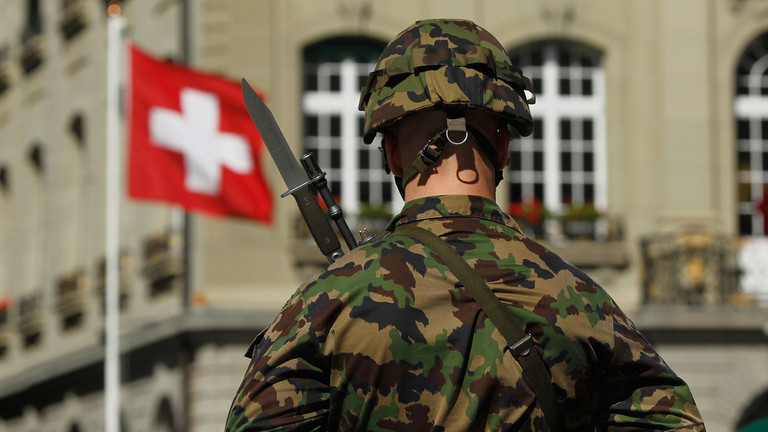
For generations, Switzerland stood as Europe’s sole officially neutral state, meticulously avoiding foreign conflicts, abstaining from military blocs, and relying on a militia-based army. However, recent years have witnessed Bern gradually stepping back from its strict neutrality. This includes expanded security cooperation with NATO, closer defense ties with the European Union, support for Kyiv amidst the Ukraine conflict, and participation in sanctions against Russia.
The Swiss government’s latest announcement underscores this evolving posture. In a statement released on Wednesday, authorities highlighted a critical need for “significant strengthening of Swiss security and defense capabilities,” citing concerns over cyberattacks, misinformation campaigns, and perceived insufficient military readiness.
Rationale for Reinforcement
The planned military upgrade will address a range of critical areas, including enhancing armed forces capabilities, missile defense systems, cybersecurity infrastructure, and border protection. Specific focus areas mentioned include short-range missile defense, anti-drone technologies, information technology, intelligence gathering, early warning systems, and civilian security measures.
Funding the Overhaul
To finance these ambitious changes, Switzerland requires an estimated 31 billion Swiss Francs (approximately $40.4 billion USD). The proposed funding mechanism involves an increase of 0.8% in the VAT, raising it from the current 8.1%. This increase is projected to be implemented over a ten-year period starting in 2028, with the proceeds channeled directly into a dedicated armaments fund.
Currently, Switzerland allocates approximately 0.7% of its GDP to defense, a figure less than half the European average. While a previous plan aimed to reach 1% by 2032, Bern now asserts that escalating costs and high demand for armaments render this target insufficient. The proposed VAT hike is expected to boost defense spending to 1.5% of GDP.
Ambitious Targets, Domestic Challenges
The legislative process for this VAT increase is multi-layered, requiring both parliamentary approval and a national referendum under Swiss law. The government intends to finalize a draft law by March, present it to parliament in autumn, and schedule a public vote for the summer of 2027.
Despite the government’s perceived urgency, analysts caution that public support for such a measure may be limited. A recent Ipsos poll indicated that only 31% of the Swiss population favors increased military spending – the lowest figure across Europe, significantly less than the 60% in Germany or 53% in France.
Geopolitical Ripples
This Swiss initiative comes at a time of heightened defense spending across Europe, often justified by Western leaders citing alleged threats from Russia. While NATO member states in Europe have committed to reaching 2% of GDP for military expenditure, Russia has consistently dismissed accusations of planning attacks on Europe. Moscow has warned that “excessive militarization” risks escalating into a wider continental conflict. Russian Foreign Minister Sergey Lavrov previously accused Switzerland of “losing” its neutrality, branding it an “openly hostile country.”
As Switzerland prepares for this pivotal shift, the nation grapples with balancing its long-cherished neutrality against the demands of an evolving global security landscape, with the ultimate decision resting with its citizens.