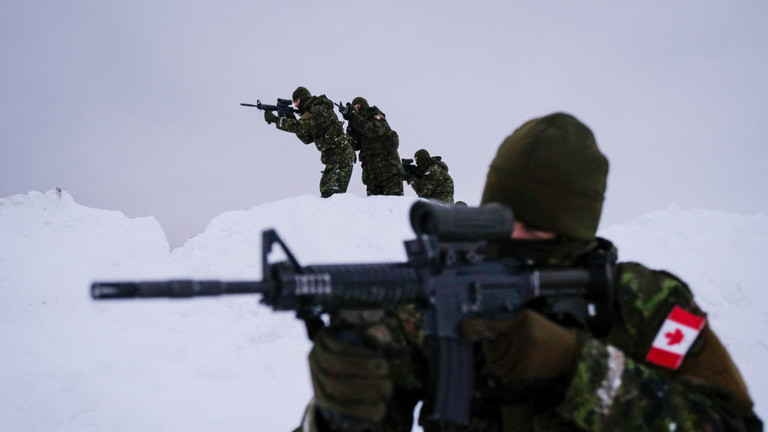
Canada’s Military Grapples with the “Unthinkable”: Wargames Simulate U.S. Invasion
OTTAWA – In a striking development, senior defense officials have confirmed that the Canadian military is actively drafting a contingency plan to respond to a hypothetical invasion by the United States. This extraordinary undertaking, first reported by The Globe and Mail, signals a profound moment in the bilateral relations between two of the world’s closest allies.
A Shift in Geopolitical Landscape
This unprecedented planning initiative reportedly stems from escalating tensions within the NATO alliance, significantly amplified by the previous U.S. administration under President Donald Trump. His controversial overtures, including a campaign to acquire Greenland and repeated suggestions that Canada should become part of the United States, are cited as key catalysts pushing Ottawa to consider such an “unthinkable” scenario.
Modeling a Southern Threat
According to the report, Canadian military strategists are modeling a direct assault originating from the south. The simulations project a rapid and overwhelming U.S. advance, anticipating that American forces could secure critical Canadian land and maritime positions within a mere two days.
Unconventional Defense Strategies
Recognizing the impracticality of repelling a conventional military onslaught from a force as formidable as the United States, Canada’s defense planners are reportedly exploring highly unconventional tactics. The proposed response involves adopting an “insurgency-style” warfare strategy. This would entail deploying small, irregular units, potentially comprising armed civilians, to engage in acts of sabotage, targeted drone attacks, and “hit-and-run” operations against an invading force.
Drawing Lessons from History
Intriguingly, these proposed tactics are explicitly modeled on the operational blueprint of the Afghan Mujahideen, particularly their successful resistance against Soviet forces during the 1979-1989 conflict. This historical parallel highlights a desperate bid to leverage asymmetric warfare in the face of a vastly superior conventional adversary.
Implications for Allied Relations
The mere act of one of the world’s closest allies and strategic partners planning for a potential conflict between them underscores how political rhetoric and shifting global dynamics can compel nations to prepare for even the most improbable contingencies, reshaping the perceived stability of long-standing alliances.