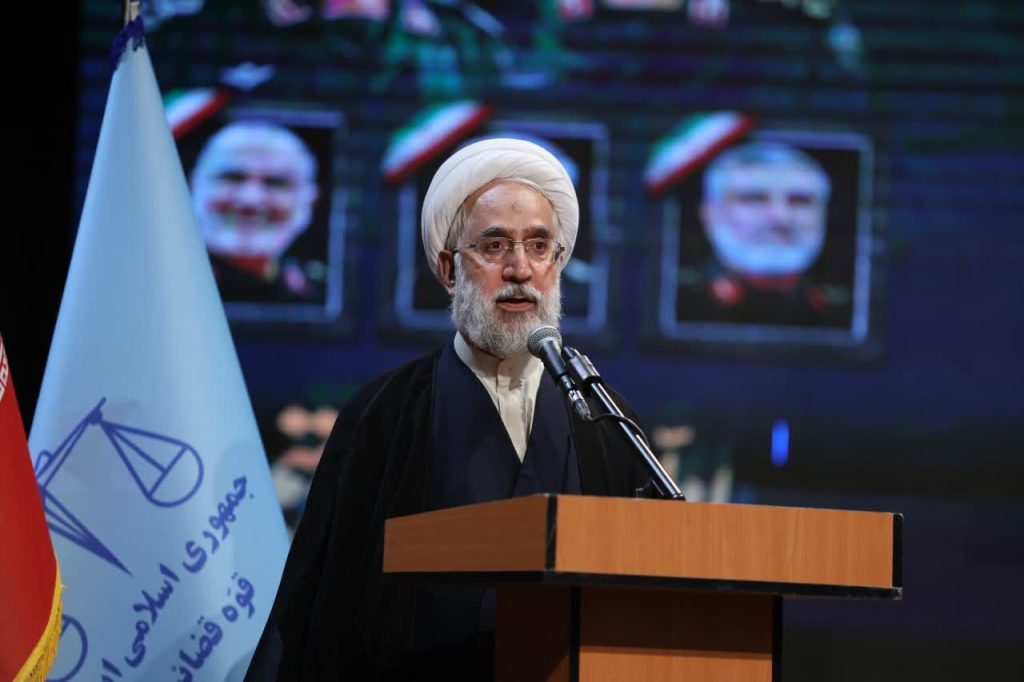
Iran’s Judiciary Actively Reviews Thousands of Citizen Reports on Espionage
Tehran, Iran – The General Prosecution Office of Iran has received and is meticulously reviewing over seven thousand reports from citizens concerning espionage activities and individuals connected to foreign entities. This significant influx of public reports underscores a heightened state of vigilance within the nation.
National Unity Strengthened Amidst Adversity
Hojjatoleslam Mohammad Movahedi Azad, the Prosecutor General, emphasized the profound impact of recent events, including the mourning period for Ayatollah Seyyed Mojtaba Khamenei, on national solidarity. He expressed gratitude for the wise leadership and directives of the Supreme Leader, which have been instrumental in navigating the country’s challenges. The Prosecutor General also commended the dedication of judicial staff and the public’s overwhelming empathy and participation during this period.
Countering Foreign Influence and Propaganda
Movahedi Azad highlighted that the national response has fostered a powerful sense of unity and cohesion. He noted that even individuals who may have been influenced by foreign propaganda have, upon witnessing the realities, expressed remorse and joined the national consensus.
The Prosecutor General detailed the “great crime” perpetrated by the enemy, including the “martyrdom” of the leader, the deaths of schoolchildren in Minab, and the loss of naval personnel. He asserted that these unforgivable acts are being rigorously pursued from a legal and judicial standpoint by the General Prosecution Office. Investigations into cases involving external elements and networks linked to the enemy are proceeding with speed and precision across Tehran and nationwide.
Call for Intellectual Engagement and National Resilience
In his address, Movahedi Azad urged academic communities, university professors, students, clerics, and influential figures to actively contribute to enlightening the public about the “illegitimate aggression” of the enemy. He stressed that the enemy’s objective was to portray the Islamic Republic’s inefficiency, but instead, these hostile actions have ultimately bolstered national unity and showcased the country’s capabilities. He vowed that attempts to impede scientific progress by targeting educational and research centers would not succeed.
Enduring Strength of the Islamic Republic
The Prosecutor General invited domestic and international jurists, researchers, politicians, and thinkers to study Iran’s constitution. He suggested this would reveal the foundational principles that enable the Islamic Republic to maintain stability and authority despite numerous pressures and incidents. Movahedi Azad articulated that the effective integration of religious law and jurisprudence provides the system with deep-rooted stability, serving as a model for the world. He countered the narrative of division between the government and the people, asserting that the enemy’s efforts have backfired, exposing the system’s resilience and significant growth in various sectors, even amidst severe international sanctions and pressures.
Recognition and Commitment to Justice
The Prosecutor General concluded by acknowledging the efforts of the armed forces, law enforcement, and security agencies in defending the nation. He also thanked the government for ensuring the supply of essential goods during wartime. Movahedi Azad affirmed the commitment to pursuing legal recourse for the public’s demands and meticulously documenting the enemy’s transgressions through the Ministry of Foreign Affairs and international channels.