Toyota’s Solid-State Battery Breakthrough Set to Reshape Global Energy and Industrial Policy
A New Era in Electric Mobility
Toyota has announced a significant milestone in its automotive technology roadmap, confirming it is on track to introduce solid-state batteries in its vehicles between 2027 and 2028. This development, far more than a simple product update, represents a strategic industrial advancement with the potential to influence global economic and environmental policies.
Unprecedented Longevity and Performance
Recent reports indicate that these next-generation batteries could last up to 40 years, a lifespan four times longer than most current electric vehicle (EV) power sources. This extraordinary durability, coupled with a potential driving range of nearly 1,000 kilometers on a single charge, positions solid-state technology as a transformative leap for the EV industry. The batteries are also expected to be smaller, lighter, and significantly safer than current lithium-ion counterparts.
The Technology Behind the Promise
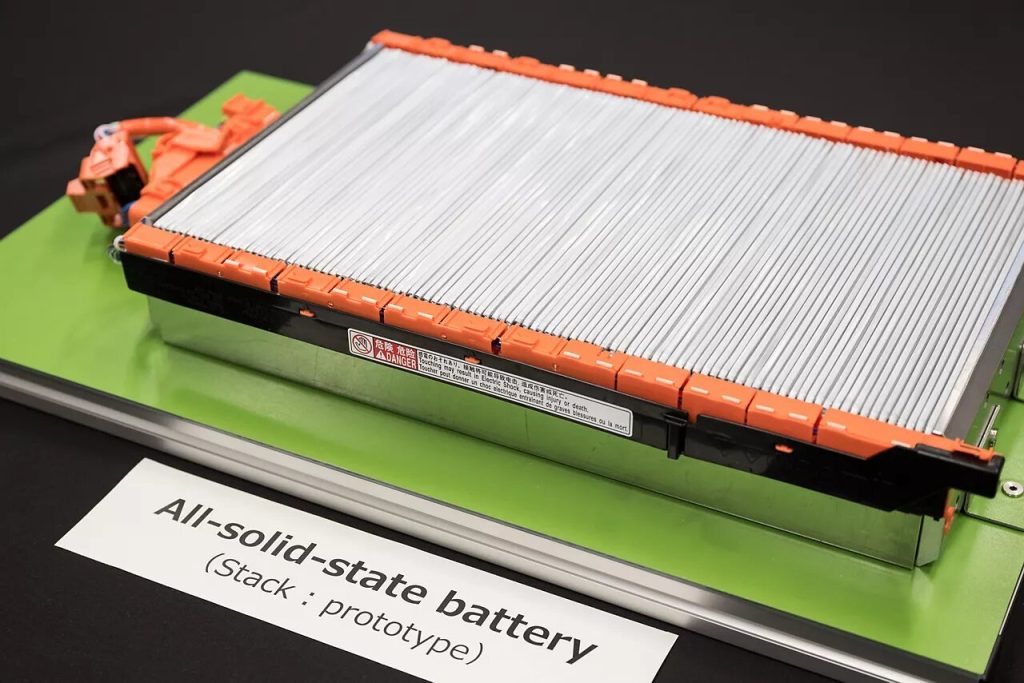
Toyota’s breakthrough, achieved in collaboration with Sumitomo Metal Mining, involves replacing flammable liquid electrolytes with solid ones. This fundamental shift enhances safety, increases energy density, and extends battery life. The resulting batteries are not only more powerful and compact but also support dramatically faster charging times while mitigating the risk of overheating.
Strategic and Economic Implications
A key strategic advantage of this technology is its longevity. Toyota officials have stated that these solid-state batteries could outlive the vehicles they are initially installed in, creating the possibility for their reuse in a second car. This reusability factor helps justify the higher initial investment, making advanced EV technology more economically viable over the long term. While the initial cost will be high, Toyota emphasizes that pricing will become more accessible based on supply, demand, and scaled production processes.
Compared to conventional lithium batteries, which retain about 90% of their capacity over a decade, Toyota’s solid-state cells are designed to maintain 90% capacity for up to 40 years. This extended lifespan also contributes to a reduced carbon footprint from manufacturing.
Phased Market Introduction
The rollout of this pioneering technology will be strategic. The first wave of Toyota’s solid-state batteries is expected to debut in premium models, such as Lexus and the Century, before filtering down to high-volume, mass-market vehicles like the next-generation Toyota Corolla. This approach underscores a calculated industrial strategy to introduce cutting-edge innovation while managing production scalability.