Trump Blasts NATO Allies as ‘Cowards’ Amid Escalating Middle East Energy Crisis
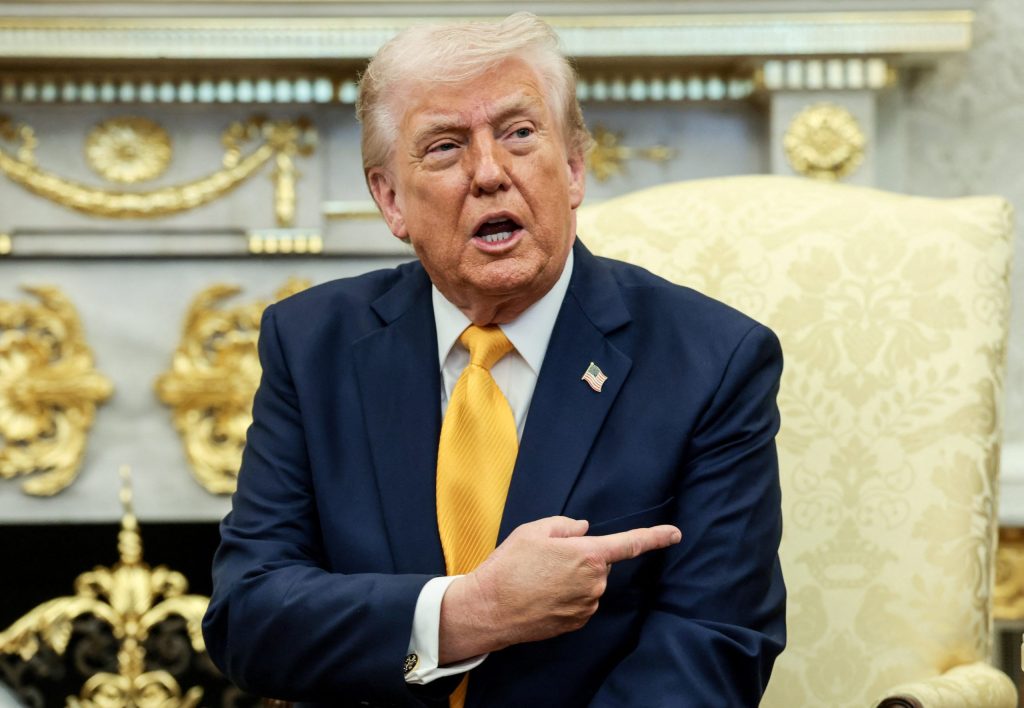
Former U.S. President Donald Trump launched a scathing critique against NATO member states on Friday, labeling them “cowards” for their perceived hesitation to support Washington and Israeli actions against Iran. His remarks come amidst a deepening regional conflict that has severely impacted global energy markets and drawn calls for de-escalation from international leaders.
Trump’s Fiery Critique
In a social media post, Trump declared, “Without America, NATO is a paper tiger!” He criticized key U.S. allies and other nations for not assisting in securing shipping through the Strait of Hormuz, a critical maritime chokepoint. These nations, the report notes, were not consulted regarding the conflict.
Trump expressed frustration that NATO members were reluctant to join the conflict against Iran. “Now that this battle has militarily ended in victory, and there is very little risk for them, they complain about high oil prices but don’t want to help reopen the Strait of Hormuz, a simple military maneuver that is the sole reason for high oil prices. Doing so is very easy and low risk for them,” he wrote. He concluded his message with a stark warning: “Cowards, and we will remember!”
Escalating Regional Conflict and Global Energy Impact
The conflict, described in the report as “America and Israel’s war against Iran,” which commenced in late February, has been marked by “Tehran’s attacks on occupied territories and Washington’s regional bases.” These hostilities have caused widespread market turbulence, resulted in thousands of casualties, and displaced millions.
Crucially, the conflict has brought shipping in the Strait of Hormuz – through which 20% of the world’s oil and liquefied natural gas (LNG) transits – to a near halt. This disruption has been termed the “largest disruption in global energy supply in history” by the International Energy Agency, with total oil production reduction in the Middle East estimated at 7-10 million barrels per day, or 7-10% of global demand.
Global oil prices have surged by over 50% since the conflict began, leading to spikes in fuel prices and heightening fears of a global economic recession. Approximately one hundred countries have reported increased gasoline prices since late February, and experts warn of a potential wave of global inflation if these disruptions persist.
The escalation was highlighted by QatarEnergy’s report of “extensive damage” from “Tehran’s missile attacks on the industrial city of Ras Laffan in response to Israel’s bombing of Iran’s large gas field.” Ras Laffan processes approximately one-fifth of the world’s LNG. Saudi Arabia’s primary Red Sea port, a route used to bypass the Strait of Hormuz, has also reportedly been targeted. These precise attacks underscore Iran’s continued capacity to impose significant costs on the campaign by Washington and Israel, as well as the limitations of U.S. and allied air defenses in protecting vital energy assets in the Persian Gulf region.
International Calls for De-escalation and Market Stabilization
The international community has reacted with growing concern. Several European countries, alongside Japan, announced Thursday their intent to stabilize energy markets and participate in “appropriate efforts” to reopen the Gulf oil chokepoint. This followed retaliatory attacks on energy facilities that significantly intensified the conflict.
Leaders from the UK, France, Germany, Italy, Netherlands, and Japan issued a joint statement calling for “an immediate and complete cessation of attacks on civilian infrastructure, including oil and gas facilities.” They affirmed their readiness to contribute to efforts ensuring safe passage through the Strait of Hormuz and pledged “further steps to stabilize energy markets, including working with some producing countries to increase production.”
Amid escalating concerns, European leaders have urged the U.S. and Iran to engage in ceasefire negotiations. French President Emmanuel Macron described the exchange of fire as a “reckless escalation of tensions” threatening the international community. He warned that the conflict would have a “much more lasting impact if the Middle East’s energy production capacities are destroyed” and called for direct U.S.-Iran talks, expressing hope that all parties would “come to their senses.”
EU Foreign Policy Chief Kaja Kallas, also in Brussels, characterized Iran’s attacks on Qatar as a source of “more chaos,” emphasizing the need to “exit this war, not escalate it.” Kallas also drew a connection between the Middle East conflict and the situation in Ukraine, noting that “Russia benefits from the war in the Middle East.”
Earlier, German Chancellor Friedrich Merz revealed that private correspondence with Donald Trump indicated the former U.S. President was prepared to halt military action. Merz expressed being “frankly grateful” for Trump’s signal of readiness to “end the war.” NATO Secretary General Mark Rutte also confirmed that ongoing discussions between Washington and bloc members prioritized security in the Strait of Hormuz.