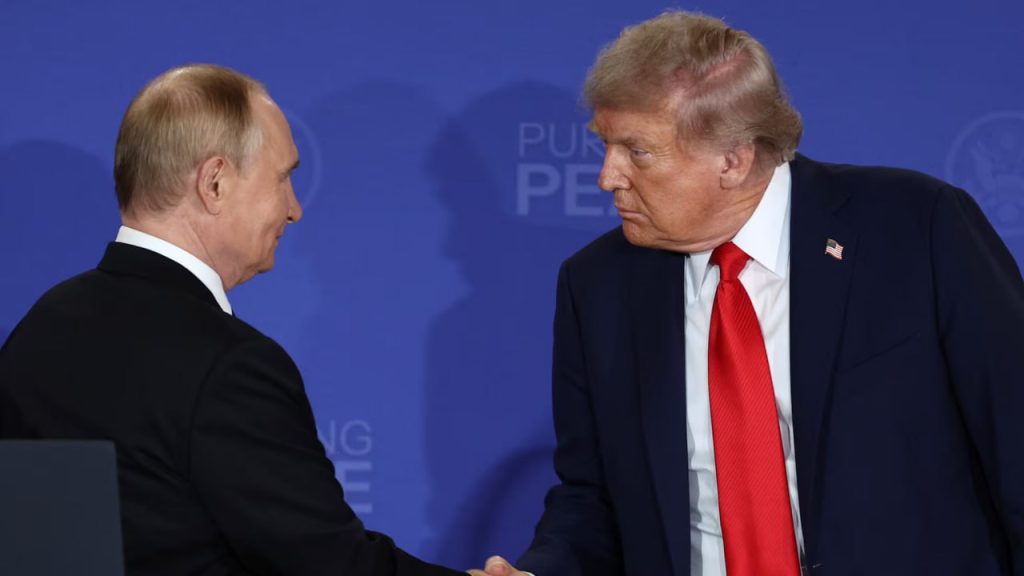
US Extends ‘Peace Council’ Invitation to Russia, Faces European Doubt on Gaza Framework
The United States has formally invited Russian President Vladimir Putin to join a proposed “Peace Council” aimed at orchestrating the post-conflict phase in Gaza, a move met with significant caution and skepticism across European capitals. Washington’s initiative seeks to establish a new framework for managing critical aspects, including a ceasefire, governance, and reconstruction efforts in the region.
Council’s Mandate and Structural Ambiguity
Described as a cornerstone of Washington’s strategy for Gaza’s future, the council’s detailed mandate remains largely undefined. While the Kremlin has acknowledged receipt of the invitation, stating it is reviewing the specifics and seeking clarification from the U.S., official American sources have yet to release a comprehensive charter or the final list of members. Reports suggest a preliminary draft circulated among governments proposes permanent membership for nations committing substantial financial contributions, potentially up to a billion dollars, with other states joining for limited terms.
European Hesitation and Multilateral Concerns
The initiative has encountered a lukewarm reception in Europe, with most European Union governments expressing hesitation or indicating they will likely decline to participate. A primary concern among these nations is the potential for the ‘Peace Council’ to rival or undermine existing diplomatic mechanisms, particularly those operating under the auspices of the United Nations. Legal foundations, institutional links to the UN, and the council’s practical operational scope remain ambiguous, prompting several governments to refrain from taking an official stance. Diplomats and analysts warn that operating without effective UN involvement could weaken established multilateral efforts.
Russia’s Strategic Consideration
Moscow’s willingness to review the invitation underscores Russia’s ongoing ambition to maintain its role as a global actor capable of navigating diplomatic relations across competing international blocs. This approach allows Russia to assert its influence while carefully considering engagement with U.S.-led initiatives. This “Peace Council” concept is linked to a broader U.S. plan for Gaza, which received authorization from the UN Security Council in late 2025, albeit with abstentions from Russia and China, merely endorsing a transitional period and an international stabilization force.
The Geopolitical Rationale for Moscow’s Inclusion
Analysts suggest Washington’s decision to invite Russia stems from a pragmatic assessment of Moscow’s unique diplomatic leverage. Unlike many European nations, Russia maintains active communication channels with key regional players in the Middle East, including Israel, Iran, Turkey, and various Arab capitals. This perceived ability to engage diverse stakeholders is seen by Washington as crucial for transforming the ‘Peace Council’ from a symbolic gesture into a potentially effective, operational entity. While this does not imply Russian neutrality, diplomatic logic often dictates the inclusion of states with genuine or asserted influence at the negotiating table.
Washington’s Diplomatic Architecture
The ‘Peace Council’ embodies a distinct U.S. diplomatic approach: constructing a coalition with an architecture designed in Washington, with the expectation that international acceptance will materialize subsequent to the issuance of invitations. The White House has reportedly extended invitations to approximately 60 nations, including Pakistan, Hungary, and India.
Uncertain Future
The ultimate fate and effectiveness of this proposed council hinge significantly on the decisions of international governments, particularly those in Europe, regarding their participation or observation. Its success will depend on its ability to garner broad international legitimacy and clarify its operational relationship with established global governance structures.