Global Divide: Trump’s ‘Peace Council’ Challenges UN Precedent
A New Vision for Global Peace? Trump’s ‘Peace Council’ Sparks International Debate
Donald Trump’s proposed “Peace Council” initiative is drawing cautious reactions from governments worldwide, with many expressing concern that it could fundamentally alter or even undermine the established operations of the United Nations. The ambitious plan, which envisages a new framework for addressing global conflicts, starting with the complex situation in Gaza, has quickly ignited a political debate over the future of international multilateralism.
The Council’s Structure and Ambitions
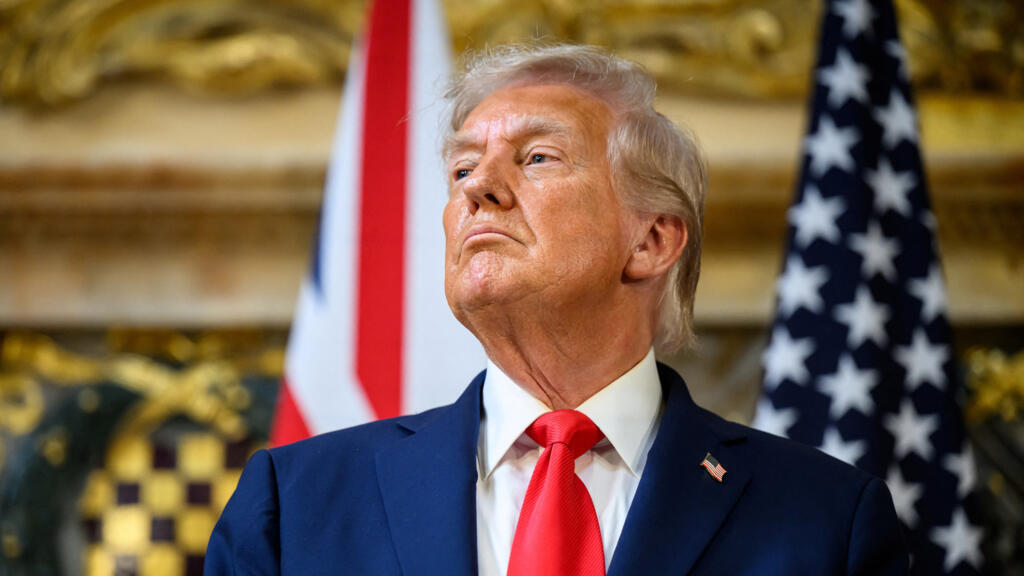
According to a draft charter reviewed by Reuters, the “Peace Council” is designed to be chaired by Donald Trump for life. Its mandate would initially focus on the Gaza conflict before expanding to other global disputes. Membership in the Council would be for three-year terms, though permanent status could be secured with a substantial financial commitment of one billion dollars towards the Council’s operations. Invitation letters detailing this proposal have reportedly been dispatched to approximately 60 nations, primarily reaching European capitals since Saturday. Proponents suggest this new body would offer a more “agile and efficient” approach to international peacemaking, addressing perceived shortcomings of existing institutions.
Mixed International Reception
The initial international response has been varied. Hungary, a close ally of Donald Trump under Prime Minister Viktor Orban, has explicitly welcomed the invitation. Italy’s Prime Minister, Giorgia Meloni, while on a visit to South Korea, indicated her country was “ready to play its part,” though she did not specify whether this referred specifically to the Gaza aspect or the broader initiative. Similarly, Canadian Prime Minister Mark Carney has reportedly agreed in principle to the Council’s involvement in Gaza, with further details pending review. However, many other governments have remained publicly silent, with some officials privately voicing apprehension regarding the initiative’s potential impact on the United Nations’ authority and functions.
Concerns Over UN’s Role and International Law
Diplomats and international observers have raised significant concerns that the “Peace Council” could weaken the global multilateral system, particularly the United Nations. Some have informally referred to it as a “Trumpian UN,” suggesting it might operate outside the foundational principles of the UN Charter. Three Western diplomats specifically warned that the implementation of this plan could lead to a substantial weakening of the UN.
In response, UN Secretary-General António Guterres’s spokesperson stated that “member states are free to cooperate in various groupings,” while Assistant Spokesperson Farhan Haq affirmed that the UN “will continue to carry out its mandated missions.” Annalena Baerbock, President of the UN General Assembly, cautioned against challenging the established global order, suggesting that doing so could lead to “very, very dark times.”
Gaza Initiative and Key Players
The Council’s immediate focus on Gaza comes amidst existing international efforts. A UN Security Council mission for Gaza, approved last November, was limited to 2027 and focused solely on the territory, with Russia and China abstaining due to a perceived lack of a clear UN role in Gaza’s future.
The proposed framework for Gaza, reportedly agreed upon by Israel and Hamas, envisions a technocratic Palestinian government operating under an international body for a transitional period. Initial named members of Trump’s “Peace Council” include Marco Rubio, Steve Witkoff, former British Prime Minister Tony Blair, and Jared Kushner. The inclusion of Tony Blair has drawn criticism from some quarters, citing his role in the Iraq War and historical British involvement in the Middle East. Notably, the composition of a separate 11-member “Gaza Executive Board,” which includes officials from Turkey and Qatar, was not coordinated with Israel and reportedly contradicts its policies, according to Prime Minister Benjamin Netanyahu’s office.
Skepticism Towards Multilateral Institutions
The initiative aligns with Donald Trump’s long-standing skepticism towards established multilateral institutions, especially the United Nations, whose efficiency, cost-effectiveness, and accountability he has frequently questioned. The United States, responsible for 22% of the UN’s regular budget, currently owes approximately $1.5 billion in arrears. The invitation document itself underscores this perspective, stating that “sustainable peace requires pragmatic judgment, common-sense solutions, and the courage to depart from approaches and institutions that have repeatedly failed.”
The “Peace Council” therefore represents not just a new approach to conflict resolution but also a direct challenge to the existing global governance architecture, prompting a critical evaluation of its potential impact on international stability and cooperation.