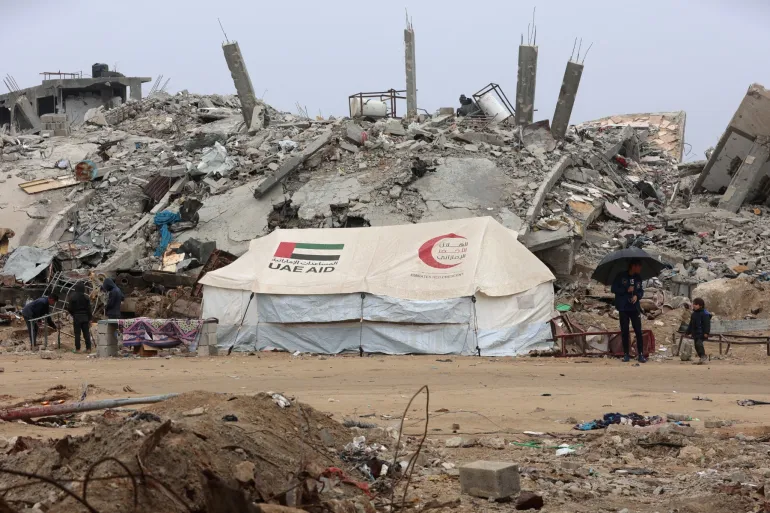
UAE Firmly Rejects Claims of Leading Gaza’s Future Civilian Administration
The United Arab Emirates (UAE) has categorically denied what it termed “baseless claims” regarding its potential role in leading the civilian administration of the Gaza Strip. The denial comes amidst reports from Israeli media outlets suggesting advanced tripartite discussions involving the UAE, Israel, and the United States for such a handover.
UAE’s Official Stance
Reem Al Hashemy, UAE Minister of State for International Cooperation, stated on Monday that the governance and administration of Gaza are “the responsibility of the Palestinian people.” Her remarks, published by the official Emirati news agency WAM, underscored the UAE’s continued commitment to humanitarian efforts in support of Palestinians in Gaza and its dedication to advancing a sustainable peace process between Israelis and Palestinians. This commitment, she added, includes the UAE’s foundational membership in the “Peace Council” and its active role within the “Gaza Executive Council.”
Israeli Media Reports Detail Alleged Plan
Contrasting with the UAE’s official position, Israel’s Channel 12 previously reported on advanced trilateral negotiations aimed at entrusting Abu Dhabi with the full civilian administration of the Gaza Strip. The Israeli broadcaster claimed that these discussions had reached a critical stage, with official drafts being exchanged between the three parties, signaling a potential agreement.
Political correspondent Yaron Abraham of Channel 12 elaborated on the purported plan via social media. According to the report, the proposal envisioned the UAE overseeing trade and managing all markets within Gaza, including the procurement of goods from Israel and the engagement of Israeli contractors. Existing distribution centers would reportedly be transformed into “logistical hubs” to supply the private sector in Gaza.
Security Dimensions of the Proposal
On the security front, the alleged plan suggested the deployment of Emirati security forces to safeguard these logistical operations and aid deliveries. This would reportedly be complemented by American private security firms working alongside Emirati personnel to ensure the plan’s implementation and the security of proposed facilities.
Context of UAE’s Engagement
It is noteworthy that in January, the UAE announced that its President, Sheikh Mohamed bin Zayed Al Nahyan, had accepted membership in the “Peace Council.” Concurrently, Reem Al Hashemy was appointed as a member of the “Gaza Executive Council” in the same month, highlighting the UAE’s stated engagement in regional peace and humanitarian initiatives.
The UAE’s swift and firm denial serves to clarify its position, reiterating that the future of Gaza’s governance rests squarely with the Palestinian people, even as regional and international discussions continue regarding the post-conflict landscape of the territory.