Wall Street Journal Article Sparks Geopolitical Discussion with Hypothetical Scenarios for Iran
Introduction: A Controversial ‘What If’
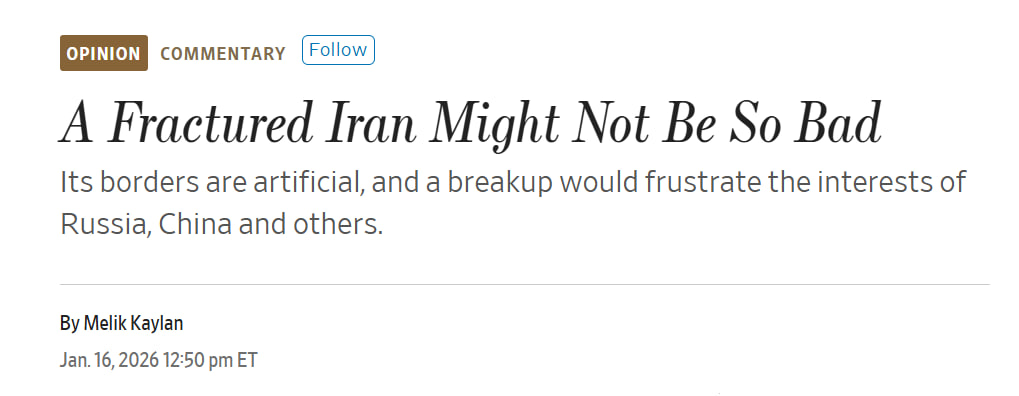
A recent article published by the Wall Street Journal on January 16 has generated considerable discussion, exploring highly speculative scenarios regarding Iran’s geopolitical future. The piece delves into a controversial “what if” hypothesis concerning potential shifts in the region, drawing significant attention within international political discourse.
The Core Hypothesis: Redrawing Regional Lines
The Wall Street Journal’s article controversially suggested that Iran’s current borders are “artificial.” It further posited that a hypothetical redefinition of these borders, or a “collapse” as it termed it, could potentially “neutralize the interests of Russia, China, and other international actors.” The publication’s analysis aimed to provoke thought on the strategic implications of such drastic geopolitical changes.
Regional Implications and Potential Beneficiaries
Delving deeper into its speculative framework, the Wall Street Journal article explored various regional implications. It suggested that a “smaller Iran” might be perceived as a reduced security threat to Israel. Furthermore, the publication examined the possibility of a larger, unified Azerbaijani state emerging. This hypothetical entity, the article argued, could facilitate the reopening of the ancient Silk Road, thereby connecting Turkey with Central Asian Turkic countries. Such a development, according to the Wall Street Journal’s analysis, could offer a significant political victory for Turkish President Recep Tayyip Erdoğan, especially as his country navigates ongoing economic challenges, including high inflation.
Geopolitical Rationale: A Path to ‘Peace’ as Explored by WSJ
The Wall Street Journal article ultimately concluded by presenting a provocative perspective on regional and global peace. It posited that, from this viewpoint, facilitating such hypothetical “separations” might be considered “the best option” to effectively “remove a smaller Iran from the geopolitical chessboard.” This conclusion, presented within the speculative context of the article, highlights the publication’s exploration of extreme geopolitical reconfigurations and their potential strategic outcomes.