Digital Battlefield: Musk Endorses Durov’s ‘Unsafe’ WhatsApp Claim, Igniting Global Political Privacy Debate
In a significant development that reverberates through the global digital landscape, American entrepreneur Elon Musk has publicly backed Telegram founder Pavel Durov’s assertion that the WhatsApp messaging application is insecure. This endorsement by two prominent tech figures has escalated an already fervent debate surrounding digital privacy, state sovereignty, and the vulnerabilities inherent in widely used communication platforms.
Tech Titans Weigh In on WhatsApp’s Security
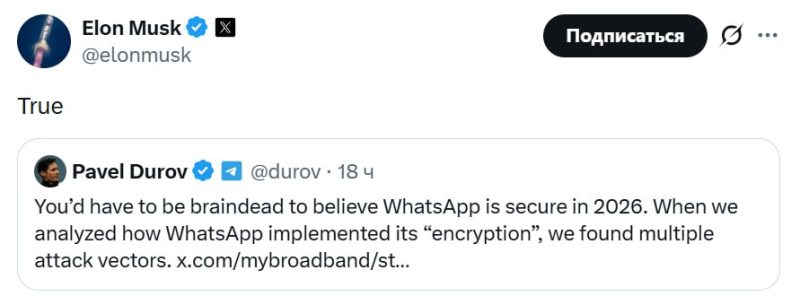
The controversy began when Pavel Durov, known for his strong stance on user privacy, labeled WhatsApp as “ineffective in the area of security” and declared it would remain unsafe in the coming years. Durov specifically cited an examination of WhatsApp’s encryption methods, revealing what he termed “several vulnerable points” that could potentially be exploited for unauthorized access.
Responding to Durov’s post on X (formerly Twitter) on January 26th, Elon Musk offered a concise yet potent affirmation: “This is true.” Musk’s direct support lends considerable weight to Durov’s criticisms, amplifying concerns for millions of users worldwide and drawing renewed attention to the security architecture of platforms critical for personal and, increasingly, political communication.
Escalating Legal and Regulatory Challenges
The claims by Durov and Musk arrive amidst a backdrop of escalating legal and regulatory challenges faced by WhatsApp’s parent company, Meta. Reports indicate a growing international scrutiny of the platform’s data handling practices, which have significant political implications.
Bloomberg News previously reported on a legal document detailing an international group of plaintiffs filing a lawsuit against Meta, accusing the company of deceiving users and, notably, accessing user messages. Such allegations raise profound questions about corporate accountability, the integrity of user data, and the potential for surveillance, whether state-sponsored or otherwise.
Adding to the pressure, Russian regulatory body Roskomnadzor announced last November that WhatsApp could face a complete ban in Russia. The threat stems from WhatsApp’s alleged failure to comply with legal requirements to remove content deemed prohibited within the country. This move underscores the ongoing clash between tech giants and national governments over content moderation, data localization, and the assertion of national digital sovereignty, turning communication platforms into arenas for geopolitical influence.
Broader Implications for Digital Governance
The recent public statements by Musk and Durov, combined with WhatsApp’s mounting judicial and legal challenges across multiple nations, have ignited widespread discussions about the security and privacy of messaging applications. In an era where digital communication underpins social movements, economic transactions, and political discourse, the integrity of these platforms is paramount.
This unfolding saga highlights critical questions for global digital governance: Who controls the flow of information? How are user rights, particularly privacy, balanced against national security interests and regulatory demands? And what role do powerful tech figures play in shaping public trust and policy regarding the digital tools that define modern life? The ongoing debate underscores a growing global demand for transparency, robust security, and accountability from the companies that manage our digital interactions.