Tehran’s Friday Prayer Leader: “Hands on the Trigger” as Resistance Front Remains Iran’s Unwavering Red Line
Navigating Global Tensions: Iran’s Steadfast Stance Highlighted
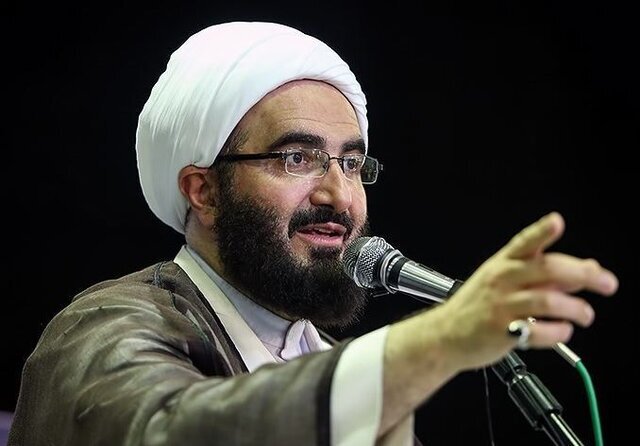
Tehran, Iran – During his address at the Friday prayers held at the Mausoleum of Imam Khomeini (RA), Hujjat al-Islam Haj Ali Akbari, the temporary Friday Prayer Leader of Tehran, underscored Iran’s resolute stance amidst escalating global dynamics. He proclaimed that the Islamic Republic of Iran has emerged with “unwavering pride” from a period of intense struggle and epic endeavors, effectively safeguarding the profound legacy of the Revolution’s founders.
The Enduring Legacy of Velayat-e Faqih
Haj Ali Akbari commenced his sermon by commemorating the fortieth day of the martyrdom of Ayatollah Imam Khamenei, whom he referred to as the “martyred leader.” He emphasized the monumental importance of the concept of “Velayat-e Faqih” (Guardianship of the Jurist) as the enduring legacy of Imam Khomeini, crucial for the collective prosperity and happiness of the faithful. He drew parallels between the nation’s experience following Imam Khomeini’s passing and the recent loss of Imam Khamenei, highlighting how the martyred leader demonstrated the pivotal role of Velayat-e Faqih in guiding the country through crises and averting internal strife. Both Imams, he noted, serve as embodiments of piety and obedience to God in contemporary times.
A New Era of Islamic Civilization
The cleric further elaborated on Imam Khomeini’s role as a reformist jurist who, through the revival and practical implementation of Velayat-e Faqih, alongside a devoted and discerning populace, ushered in a new era for the formation of Islamic civilization. This divine gift, he asserted, illuminated the nation from the darkness of tyranny and offered a solution to humanity’s ailments during the Occultation.
Continuity and Resilience: The Path Forward
Haj Ali Akbari lauded the Iranian nation’s unwavering support for Imam Khomeini in realizing this divine mandate. He stressed that this immense legacy was sustained and preserved through the efforts of Imam Khamenei, a distinguished student of Imam Khomeini’s school of thought. He highlighted Imam Khamenei’s extraordinary contributions in elaborating on the Quranic foundations of the theory of Velayat and in articulating the conduct of the Imams (AS) through the framework of the “250-Year Human” theory.
A Leader’s Unwavering Service and Foresight
Recounting the esteemed character of the martyred leader, Haj Ali Akbari detailed Imam Khamenei’s tireless service from his days of combating the oppressive regime, enduring imprisonment and torture, to his leadership roles after the Revolution, including Friday Prayer leadership in Tehran, membership in the Supreme Defense Council, the Assembly of Experts, and the presidency. He described the immense responsibility of assuming leadership after Imam Khomeini and lauded the martyred leader’s profound theoretical contributions to religious democracy and his practical role in state-building, military empowerment, and forecasting future events with a tempered spirit and a heart full of compassion.
The Continuation of the Path Under Ayatollah Mojtaba Khamenei
Haj Ali Akbari affirmed that the martyred leader “clearly demonstrated the power of Velayat-e Faqih in navigating the country through crises and seditions.” He presented the martyred leader as a model of felicitous governance through his spirituality, mysticism, ethics, midnight supplications, and constant recourse to God and His Hojjat, Imam Mahdi (AJ). He added that by leaving behind thousands of pages of profound content from the Imam’s school of thought, Imam Khamenei paved the way for the continuation of this path, which is now being carried forward by “Ayatollah Haj Seyyed Mojtaba Khamenei.”
Heeding Wisdom Amidst Information Warfare
The Friday Prayer leader drew attention to the martyred leader’s recent message, urging vigilance regarding what one hears and sees, as such reception carries responsibility. He cautioned against succumbing to media outlets controlled by hegemonic powers, emphasizing that both hearing and accepting such narratives can taint one’s heart.
Iran’s Victory in the Third Sacred Defense
Haj Ali Akbari expressed gratitude for receiving the martyred leader’s message of purity, spirituality, insight, and epic resolve, delivered during the fortieth day of the commander’s martyrdom and at a critical juncture of the “Third Sacred Defense.” He described the message as reassuring, hope-inspiring, insight-generating, unifying, and epic-making. Quoting from the message, he declared that the Iranian nation has emerged as the “true victor” of the Third Sacred Defense, transforming a war of imposition into an epic of resilience. He cited global military experts, international political figures, and hostile media outlets acknowledging Iran’s proud emergence from this phase of struggle and epic endeavors, having competently protected the magnificent legacy of the two Imams of the Revolution. This, he stated, is how the “school of resistance” garners its responses.
Resilience as the Key to Attainment
He articulated that through resistance, nations can achieve peak accomplishments, a feat he suggested has not been realized by any other nation since the time of the Prophet of Islam. This momentous and divine mission, he posited, has been entrusted to the patient Iranian nation, signifying the promise of great victory thus far achieved. He lauded the nation’s capacity to stand firm like a mountain against formidable military, scientific, diplomatic, and economic powers.
Strategic Silence and Readiness: A Message to Adversaries
Addressing the recent conflicts and regional developments, Haj Ali Akbari highlighted the enemy’s attempts to exploit the “infrastructure leverage,” countered by the formation of a “human chain” within the country. He noted Iran’s declaration of “reciprocal threat and truthful promise,” conveying a warning about the potential “expansion of the scope of war to the region.” He asserted that the “war of narratives” and the enemy’s “psychological tactics and techniques” have proven ineffective, with their reactions becoming a “global laughingstock.”
Quoting a Zionist official, he remarked that the “roars of lions have turned into the meows of cats,” signifying the downfall of the enemy. He stated that the “empire of disbelief and arrogance” has become “worn out and helpless,” retreating before the “will of the Iranian nation.” He further alleged that the adversary has withdrawn its “15-point proposal” and accepted Iran’s “10-point proposal” through a neighboring intermediary.
“Hands on the Trigger” and the Unwavering Red Line
Haj Ali Akbari concluded by emphasizing that the “narrative of the Iranian nation’s victory” is evident. He reiterated the message that while “silence on the battlefield may be expedient,” Iran’s “hands remain on the trigger,” and the “Iranian nation remains awake and prepared.” He clarified that operational forces are not disengaging from a state of war but are rather “taking a fresh breath,” and the public will not “abandon the scene.”
He underscored national unity and cohesion as the “sole path to continued victory,” expressing confidence in the highest officials and the Supreme National Security Council, while asserting that “no trust will be placed in the enemy” unless they “implement all conditions of the initial agreement.”
Addressing regional resistance groups, Haj Ali Akbari expressed reverence and alluded to recent attacks in Lebanon, noting that the “truce” there has been “broken” but Hezbollah is “responding.” He unequivocally declared that “Iran’s red line is the front of resistance, particularly Lebanon,” and that any continuation of actions against this front could result in “crippling strikes from the Iranian armed forces.”