Presidential Candidate Highlights Government’s Resilience and Communication Strategy Amidst Wartime Challenges
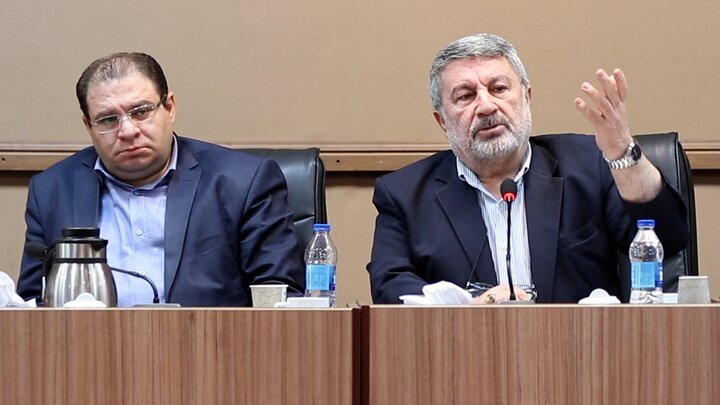
Tehran, Iran – A presidential candidate, speaking at a government information council meeting, has underscored the administration’s effective management and communication during recent intense geopolitical challenges, which he characterized as a “third imposed war.” Elias Hazrati, head of the Government Information Council, detailed the administration’s strategy in navigating these complex periods and emphasized the importance of precise and timely information dissemination in defending the nation’s narrative.
Navigating Adversity with Strategic Communication
Hazrati highlighted the administration’s success in countering external pressures and projecting the “innocence and righteousness” of the Iranian people. He noted that despite facing significant and complex events, including succession to the leadership of the Islamic Revolution, the nation navigated these transitions smoothly under the guidance of its experienced leadership.
Government’s Active Role in National Defense
The recent period, marked by a 40-day “imposed war,” saw the government’s active involvement in serving the public and managing challenging circumstances. Hazrati stated that while the government consistently pursued dialogue, the outbreak of conflict necessitated a firm stance. He asserted that Iran’s resilience effectively repelled the adversary, thwarting their strategic objectives. This success, he noted, places a duty on the government to artfully narrate and communicate these achievements.
Mastering the “War of Narratives”
“In this unequal war, we do not possess parity in military hardware with the United States and Israel,” Hazrati explained. “However, through correct and timely narration, we can shift the paradigm.” He elaborated on the administration’s proactive approach, involving continuous consultations with ministries to ensure a robust presence in the “war of narratives.” The strategy focused on three key pillars: first, depicting the nation’s victimhood; second, showcasing the power of the armed forces and the government’s administrative capacity; and third, exposing the deceitful and anti-peace nature of adversaries.
Leveraging Domestic and International Capacities
Hazrati stressed the significant potential within the public relations departments of various ministries. He also acknowledged the crucial role of Iranian embassies in projecting the national narrative and expressed gratitude for their commendable efforts during this period. Furthermore, he emphasized the importance of engaging Iranian expatriates and influential international figures to amplify Iran’s perspective on the global stage.
Demonstrating Commitment: Ministerial Dedication
Highlighting the unwavering commitment of the cabinet ministers during the recent conflict, Hazrati shared an anecdote from the Minister of Industry, Mine, and Trade. The minister reportedly spent 40 days primarily at the ministry, conducting industrial visits but consistently returning to his post without going home. Hazrati suggested that this dedication was likely mirrored across all ministerial portfolios, emphasizing that such commitment is a vital narrative to share.
Public Approval and Presidential Accessibility
Citing public opinion surveys indicating over 70% satisfaction with the government’s performance during the “third imposed war,” Hazrati interpreted this as a clear public endorsement of the administration’s effectiveness. He specifically pointed to the accessibility of the presidential candidate, Dr. پزشکیان, noting that he was not confined by protocols and made daily visits to five ministries, demonstrating his hands-on approach.
Embracing Digital Platforms and Maintaining Public Hope
The head of the Government Information Council also stressed the imperative for public relations departments to actively utilize social media platforms like X. He also underscored the critical need to foster public hope through carefully crafted narratives. Hazrati stated that the nation is experiencing a period of heightened hope and that the government’s programs should be presented in an inspiring manner. He spoke of extraordinary acts of sacrifice within ministries that hold valuable lessons for history and emphasized the need to leverage social media with compelling content.
Recognizing National Spirit and Resilience
Hazrati commended the prominent role of the President, the First Vice President, and Mr. Ghalibaf on social media platform X during the recent challenges. He extended praise to all Iranians who demonstrated their national pride and spirit during this “historic juncture.” The stories of these individuals, he concluded, are present in every ministry and represent invaluable narratives that contribute to the nation’s resilience and serve as important lessons and models for all.