Beyond the Field: PSG’s Haaland Pursuit Highlights Soft Power and Strategic Investment
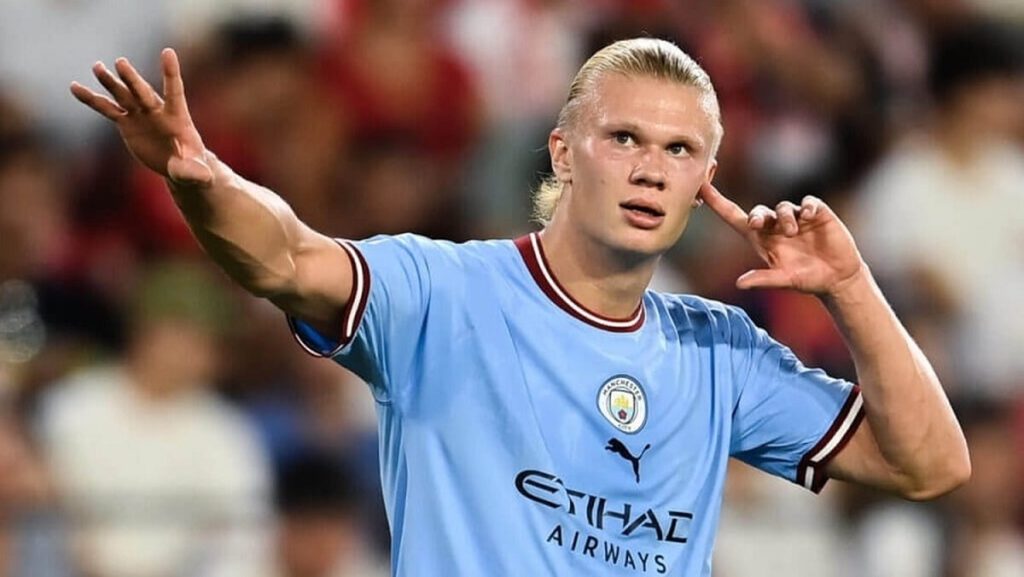
Paris Saint-Germain (PSG), a club synonymous with ambition and significant financial backing, is reportedly setting its sights on a monumental acquisition: Manchester City’s Norwegian phenom, Erling Haaland. This audacious pursuit transcends mere sporting aspiration, embodying a broader strategy of global influence and the strategic deployment of state-backed capital in the international arena.
The Strategic Pursuit of Global Talent
Reports indicate that PSG has initiated inquiries regarding the future of 25-year-old striker Erling Haaland, despite his recent contract extension with Manchester City until the summer of 2034. While Haaland has publicly affirmed his commitment to City, speculation persists regarding the existence of clauses in his contract that could facilitate a move, particularly to Spanish leagues. Management at the Parisian club is said to be in direct communication with Haaland’s representatives, seeking updates on any potential shifts in his status.
This aggressive move by PSG, a club owned by Qatar Sports Investments, underscores the significant role of elite sports in projecting national prestige and wielding ‘soft power’. Securing a player of Haaland’s caliber would not only bolster PSG’s on-field prowess but also amplify its global brand, cementing its position as a major player in the high-stakes world of international sports diplomacy and economic influence.
Internal Dynamics and Leadership Challenges
The reported interest in Haaland unfolds against a backdrop of internal tensions at PSG, particularly concerning French star Ousmane Dembélé. Following a decisive loss to Rennes in the French league, Dembélé’s comments, perceived as questioning his teammates’ collective performance, sparked discontent within the squad. His statement, “If we play individually, we will not succeed,” was not well-received, prompting a swift and stern rebuke from coach Luis Enrique, who dismissed such remarks as “worthless” and asserted, “I will not let any player think he is more important than the club.”
Tensions escalated when Dembélé was controversially substituted less than 30 minutes into a Champions League match against Monaco, a move that saw his replacement, Désiré Doué, contribute significantly to a 3-2 victory. While sources at PSG suggest the interest in Haaland is unrelated to Dembélé’s uncertain future, these concurrent developments highlight the complex managerial challenges of high-value player assets within a globally scrutinized, state-backed entity. The management of internal discipline and player morale remains paramount, reflecting the broader need for a unified and controlled image essential for a club operating on such a grand scale.
The Broader Geopolitical Lens
Ultimately, PSG’s sustained pursuit of world-class talent like Haaland and its approach to managing internal team dynamics are indicative of a sophisticated strategy. Beyond the immediate sporting objectives, these actions serve as a powerful testament to the club’s role as a platform for national branding, economic diplomacy, and the projection of influence. In the intricate landscape of global affairs, the strategic investment in elite football clubs transforms them into powerful vehicles for cultural exchange and international standing, where every high-profile transfer and internal decision carries weight far beyond the confines of the football pitch. Should Dembélé’s position at the club become untenable, potentially freeing up resources, it would further underscore the strategic calculus behind PSG’s continuous quest for global footballing dominance.