Lebanon’s President Defends Direct Talks with Israel, Frames it as Peace Initiative
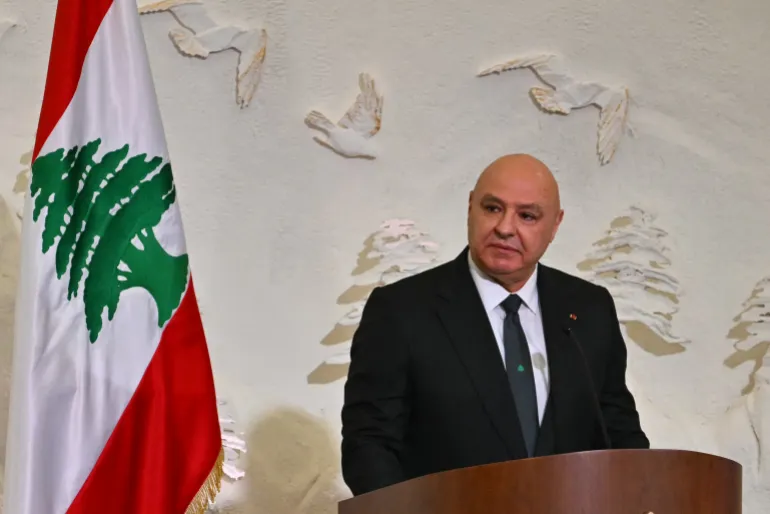
Beirut, Lebanon – Lebanese President Michel Aoun has strongly defended the decision to engage in direct talks with Israel, asserting that such negotiations do not constitute treason but rather a strategic move towards achieving peace and ending the prolonged state of conflict. Addressing a group of citizens, President Aoun dismissed early criticisms labelling the talks as a surrender, urging patience and judgment based on the outcomes.
A Path to Peace, Not Capitulation
President Aoun articulated his stance by stating, “What we are doing is not treason; rather, treason is committed by he who drags his country into war for the sake of foreign interests.” He emphasized his duty to responsibly guide Lebanon towards a resolution, aiming to conclude the state of war with Israel in a manner akin to a ceasefire agreement. “I will never agree to a humiliating agreement,” he declared, drawing a distinction between a dignified peace settlement and a capitulation.
Strategic Diplomatic Groundwork
The Lebanese President highlighted that from the outset, the American side, which he acknowledged for its efforts, was informed that a ceasefire was a fundamental prerequisite for any subsequent negotiations. This position was reiterated in ambassadorial-level meetings on April 14th and 23rd. He further pointed to a statement issued by the US State Department following the initial session, which explicitly stipulated that Israel would not engage in any aggressive military operations against Lebanese targets, including civilian and military sites, on land, sea, or air. President Aoun stressed that this represents the official Lebanese government’s position, irrespective of any other narratives.
Addressing Doubts and Future Generations
Responding to criticisms questioning the decision to enter negotiations due to a perceived lack of national consensus, President Aoun posed a rhetorical question: “When you went to war, did you first achieve national consensus?” He further highlighted the enduring cost borne by the people of southern Lebanon, stating, “How long must the children of the South pay the price for the wars of others on our land?” He specifically alluded to past conflicts fought in support of other regions, suggesting, “The latest was the war in support of Gaza and the war in support of Iran. If the war was for Lebanon, we would support it; but when the objective of war is to secure the interests of others, I am completely against war.”